For many, a tattoo is a statement, a memory, or an aesthetic choice. But when dealing with severe scarring—be it from surgery, accident, or self-inflicted wounds—the tattoo becomes something profoundly different: a tool for transformation, healing, and reclaiming personal narrative. Designing a tattoo to effectively cover highly fibrotic or uneven scar tissue is one of the most challenging and rewarding facets of the tattoo arts. It requires not just artistic talent, but a deep understanding of dermatology, tissue mechanics, and specialized design principles.
This comprehensive guide, rooted in expert knowledge from the field, focuses exclusively on the technical and symbolic strategies necessary to turn challenging scar tissue into powerful, flowing works of art. We will explore how to select designs that actively mitigate the visibility of texture and color discrepancies, ensuring the final piece serves as a beautiful, intentional testament to resilience.
Understanding Scar Tissue: Types, Healing & Tattooing Challenges
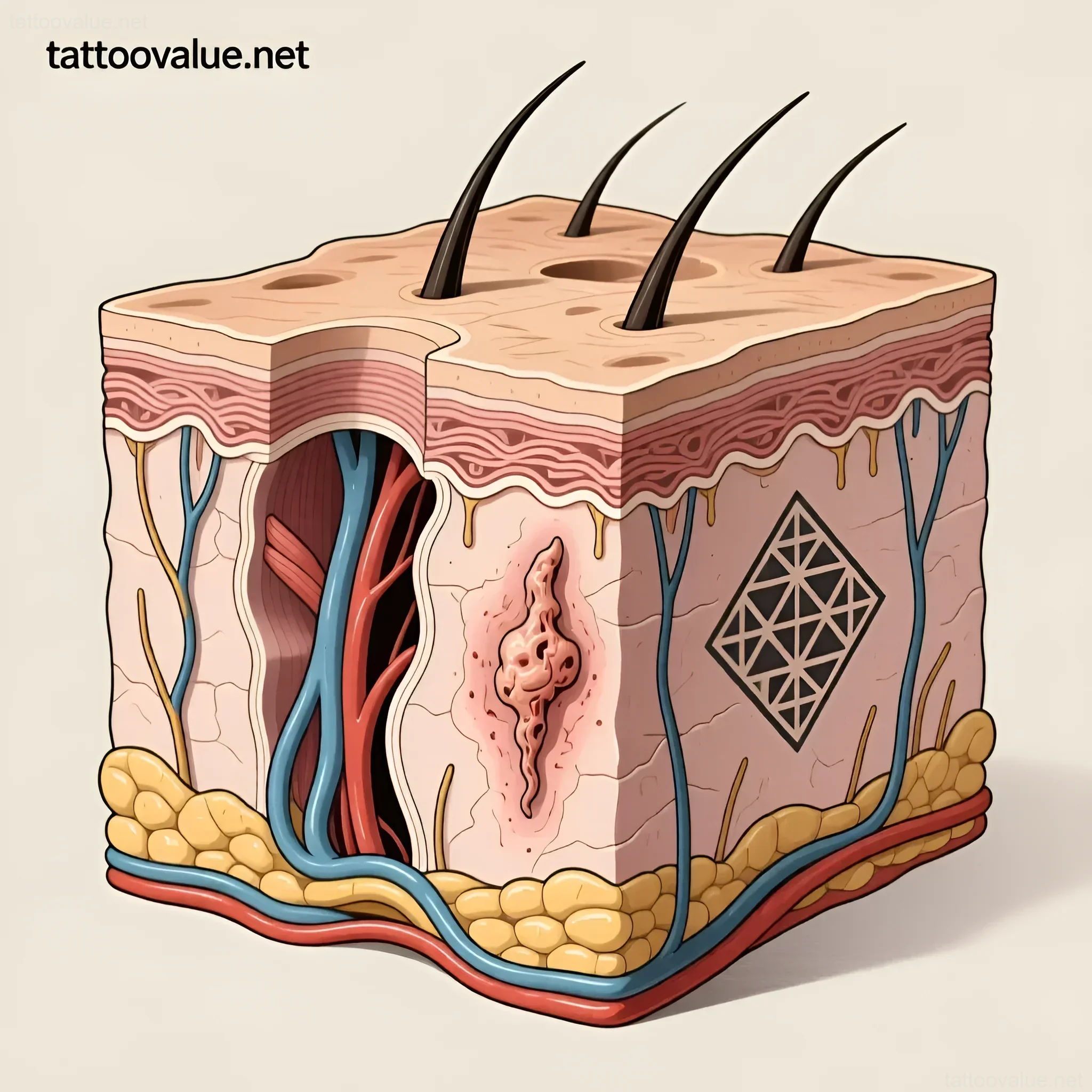
Before any needle touches the skin, understanding the canvas—the scar tissue itself—is non-negotiable. Scar tissue is fundamentally different from healthy skin; it lacks the regular structure of collagen fibers, often has poor blood circulation, and presents unique challenges regarding ink retention and texture masking.
The Critical Waiting Period
The single most important rule is patience. Scar tissue must be fully mature and settled before tattooing. Attempting to tattoo immature, pink, or red scars can lead to further damage, keloid formation, and poor ink results. Generally, a scar needs to be pale, pliable, and at least 18 to 36 months old before it is considered stable enough for tattooing.
Types of Scars and Their Impact on Design
- Hypertrophic Scars: These are raised, red, and often firm, remaining within the boundaries of the original wound. They are challenging because they create a pronounced elevation. Designs must use shading and contrast to visually flatten the surface.
- Keloid Scars: Similar to hypertrophic scars, but they grow aggressively beyond the original wound boundaries. Tattooing over true keloids is extremely risky, as the trauma of the needle can trigger further keloid formation. Many ethical artists will refuse to tattoo directly over a mature, active keloid, opting instead to design around it or use it as a 3D structural element.
- Atrophic Scars (Pitted/Depressed): These are sunken scars (common with severe acne or chickenpox) where tissue is missing. The skin is thinner and the texture is highly irregular. These areas absorb ink differently, often leading to blurring or ‘blowout’ if the artist uses too much pressure.
- Burn Scars (Contracture Scars): Often extensive, thick, and highly textural. They can restrict movement. Designs must be flexible and bold, utilizing heavy blackwork or deep saturation to counteract the uneven texture and potential lack of pigment in the scar itself.
Expert Insight: Scar tissue retains ink less predictably than healthy skin. Expect the necessity of touch-ups, sometimes multiple sessions, to achieve full saturation and consistency across the scarred area.
The Symbolism of Reclaiming Your Story Through Scar Coverage
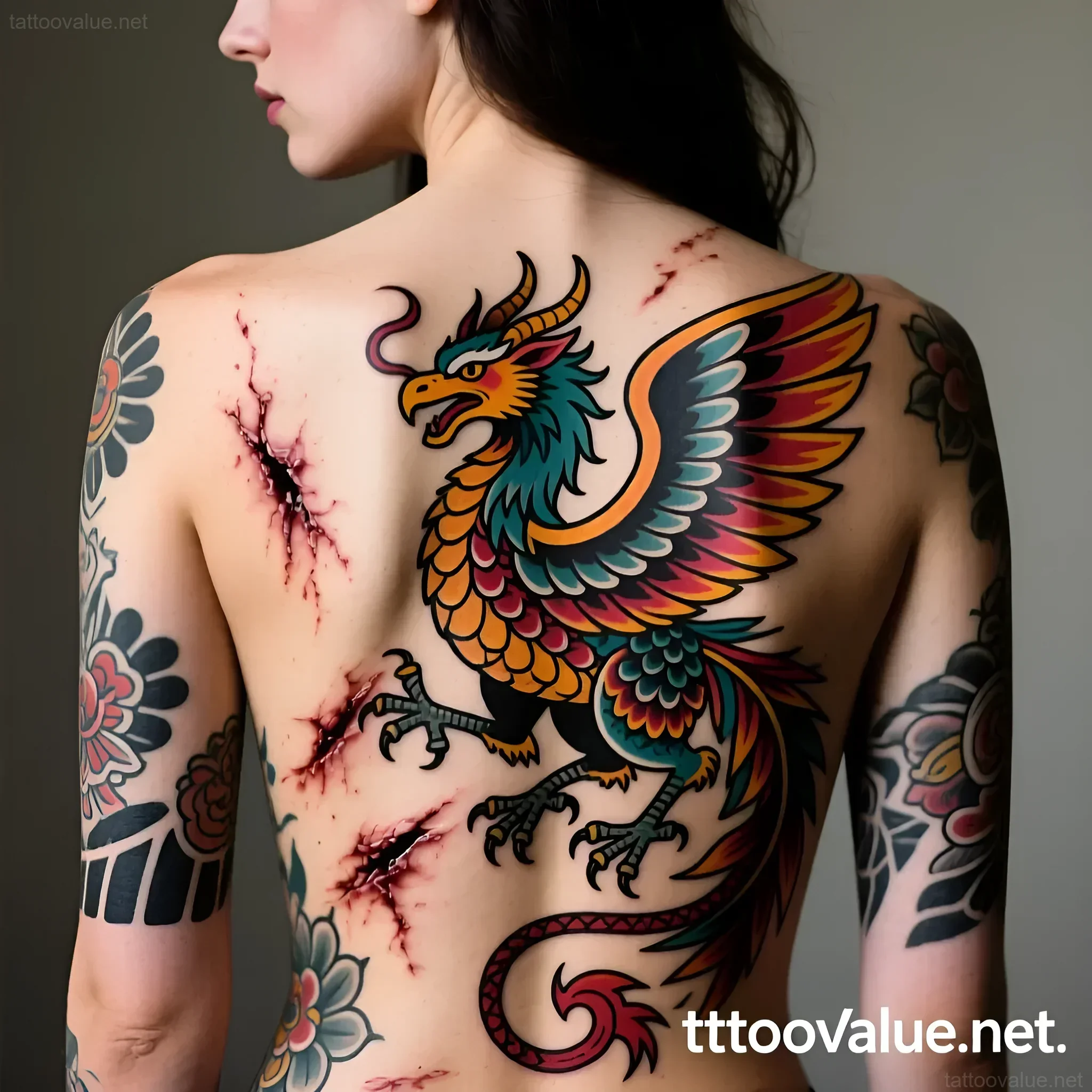
Scar coverage is rarely just about aesthetics; it is a profound act of psychological and emotional healing. The tattoo transforms a visible mark associated with pain, trauma, or medical necessity into a symbol of survival and personal agency. It shifts the narrative from what happened to you to how you rose above it.
Key Symbolic Frameworks
- The Kintsugi Philosophy: Derived from the Japanese art of repairing broken pottery with gold lacquer, Kintsugi teaches that breakage and repair are integral to the object’s history, making it more beautiful for having been broken. Designs incorporating gold leaf elements, cracks, or visible lines of ‘repair’ beautifully embody this concept.
- The Phoenix Motif: The ultimate symbol of rebirth and renewal. Designs featuring wings, fire, or the act of rising are powerful choices for scars representing major life trauma or significant medical battles (e.g., mastectomy scars).
- Control and Agency: For scars related to self-harm, the tattoo symbolizes taking back ownership of the body. The design replaces a mark of pain with a mark of intentional self-love and commitment to future well-being.
- Integration, Not Erasure: The most powerful designs often don’t truly erase the scar; they integrate it. The scar becomes the trunk of a tree, the stem of a flower, or the edge of a stylized wing, acknowledging the past while celebrating the present.
Design Strategies for Effective Scar Camouflage: Patterns, Contrast & Flow
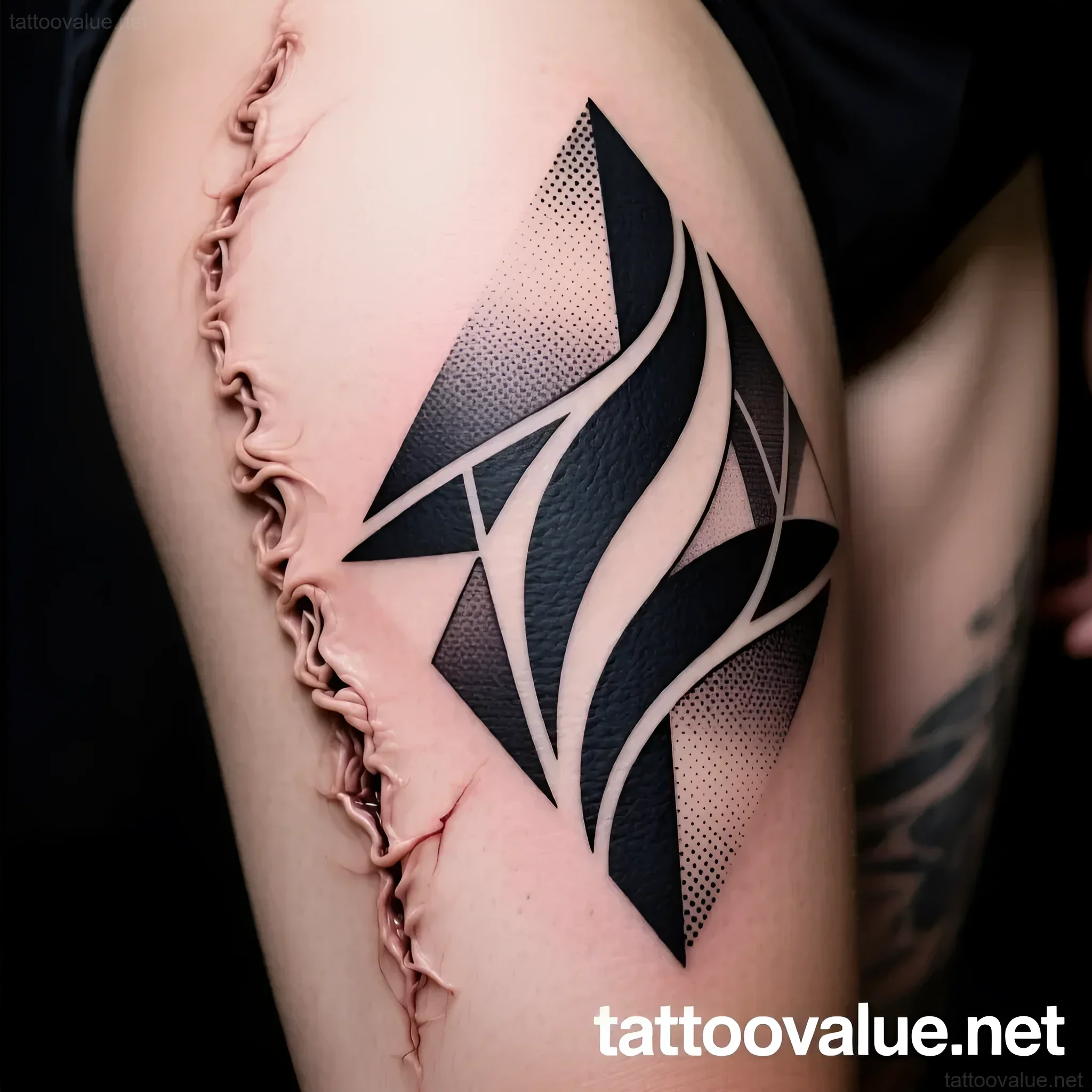
The success of a scar coverage tattoo hinges entirely on the design strategy. We must move beyond simple distraction and employ techniques that actively minimize the visual impact of texture and elevation.
1. Mastering Flow and Contour
Designs must not fight the scar’s structure; they must utilize it. If the scar is linear (e.g., surgical), the design should flow along that line, incorporating it as a natural boundary or central axis. Curved scars benefit from organic designs like swirling water, smoke, or flowing fabric that mimic the body’s contours.
2. Utilizing High Contrast and Saturation
Texture is difficult to hide, but contrast can draw the eye away from it. Bold, saturated areas of color or solid blackwork are crucial for effective coverage. Light, subtle shading or watercolor techniques are generally ineffective over severe scarring because the uneven texture will break up the delicate colors.
- Deep Saturation: Use highly pigmented colors (deep reds, true blues, solid black) directly over the scar line. These dense pigments help to unify the surface color.
- Negative Space Manipulation: Use the surrounding healthy skin (negative space) strategically. By placing heavy, dark elements immediately adjacent to the scar, the scar area itself can appear less dominant, or even disappear into the shadow play.
3. Texture Breaking and Pattern Disruption
The goal is to prevent the eye from following the continuous line or texture of the scar. This is achieved through complex patterning.
- Geometric and Ornamental Work: Designs like mandalas, intricate lace patterns, or highly detailed geometric blackwork excel at scar coverage. Their repeating, multifaceted structures break up linearity and force the viewer’s eye to focus on the overall pattern rather than the underlying texture.
- Organic Complexity: Dense botanical designs (vines, thorns, roses with deep folds) or scales (dragons, snakes) offer naturalistic texture that masks the underlying irregularity of the scar tissue. The natural shadows and highlights within the design override the shadows cast by the scar elevation.
- Stippling and Dot Work: For scars that are too delicate for heavy linework (like some atrophic scars), stippling (using tiny dots) creates a gradient and texture that is less aggressive on the tissue, yet still effectively masks minor inconsistencies.
4. Avoiding Flesh Tones and Subtle Color Camouflage
The idea of using flesh-toned ink to ‘color match’ the scar to the surrounding skin is highly discouraged for severe scarring. Flesh-toned inks rarely match perfectly, fade differently, and often highlight the underlying texture difference rather than concealing it. Focus on distraction and transformation, not invisibility.
Optimal Tattoo Placement Over Scars: Considerations & Body Mapping
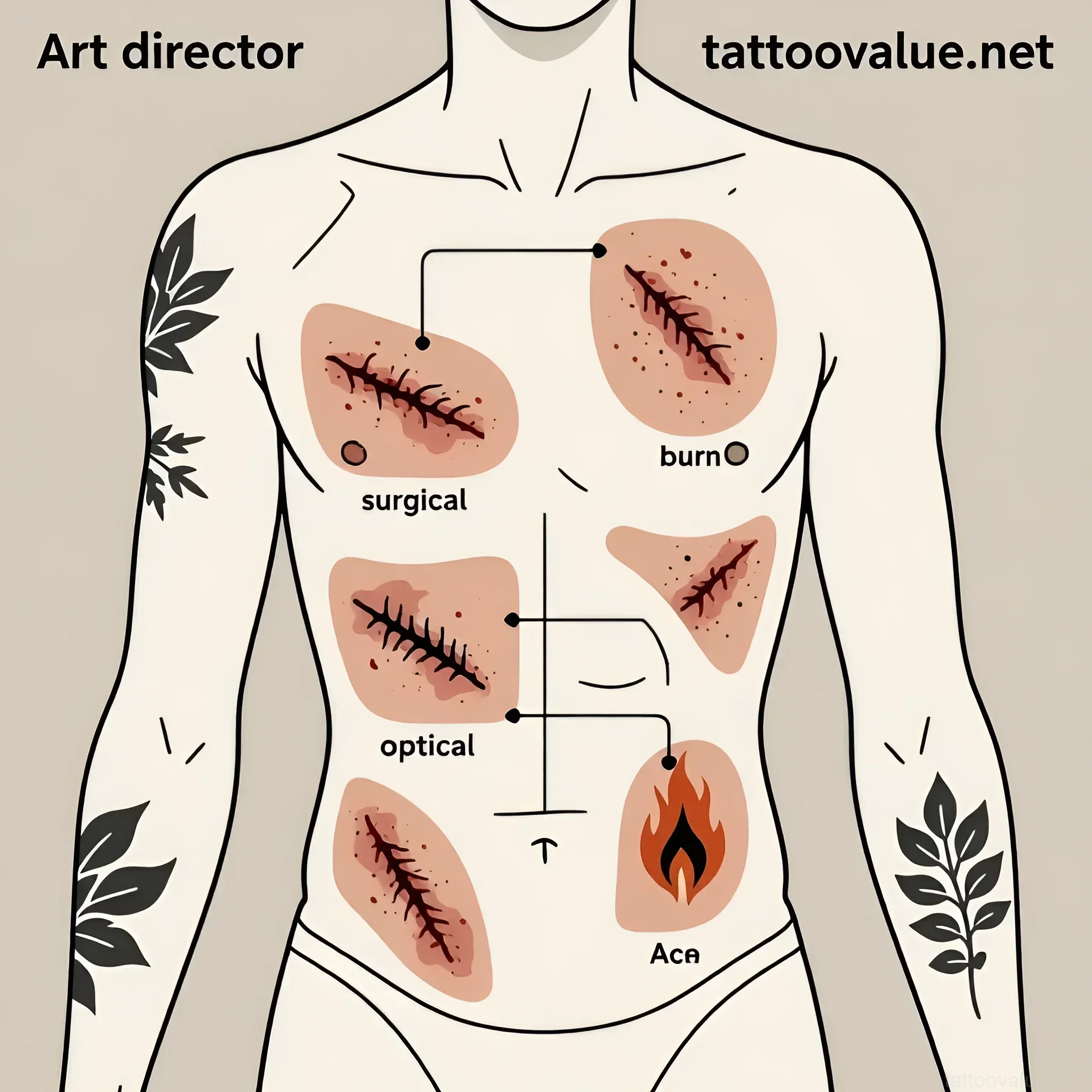
Placement is complicated when covering scars, as the tissue often lies near joints, high-movement areas, or regions prone to friction. The placement must accommodate the scar’s physical characteristics and the body’s mechanics.
Movement and Flex Points
Scars near joints (elbows, knees, shoulders) are often tight and inelastic. The tattoo design must be able to stretch and compress without distorting excessively. Artists often use designs that radiate outwards from the joint or scar, ensuring the most detailed elements are placed on the less mobile surrounding skin.
Mapping the Scar’s Texture
A specialized process of body mapping is required during the design phase. The artist must map the variations in scar tissue thickness, elevation, and color saturation. This map dictates where the darkest colors, heaviest linework, and lightest shading will be applied:
- Elevated Areas (Hypertrophic): These sections often benefit from solid black or deep color to visually flatten the surface through saturation.
- Depressed Areas (Atrophic): These areas are fragile. Designs should use lighter pressure and often incorporate detailed texture (like fine scales or leaves) to fill the void without causing blowout.
- Edges and Transitions: The most effective camouflage happens at the transition point where scar tissue meets healthy skin. Use complex elements like feathers, smoke, or abstract geometry to blur this boundary seamlessly.
Common Scar Locations and Design Solutions
| Scar Location | Typical Scar Type | Recommended Design Strategy |
|---|---|---|
| Forearms/Wrists | Linear/Self-Harm | Wrap-around designs (vines, scripts, chains). Use solid bands or heavy patterns that run perpendicular to the original scars to break the line. |
| Chest/Breast (Mastectomy) | Surgical/Large area | Large floral pieces, full chest panels (peonies, lotuses), or powerful symmetrical designs (wings, armor) focusing on the center line for balance. |
| Abdomen/C-Section | Linear/Horizontal | Designs that curve or swirl (waves, dragons, ornamental belts) to distract from the straight line, incorporating the scar as a natural curve. |
| Back/Shoulder | Burn/Accident | Large-scale narrative pieces (Irezumi backgrounds, heavy blackwork) where texture is used to create visual depth and movement. |
Choosing the Right Tattoo Style & Techniques for Scarred Skin
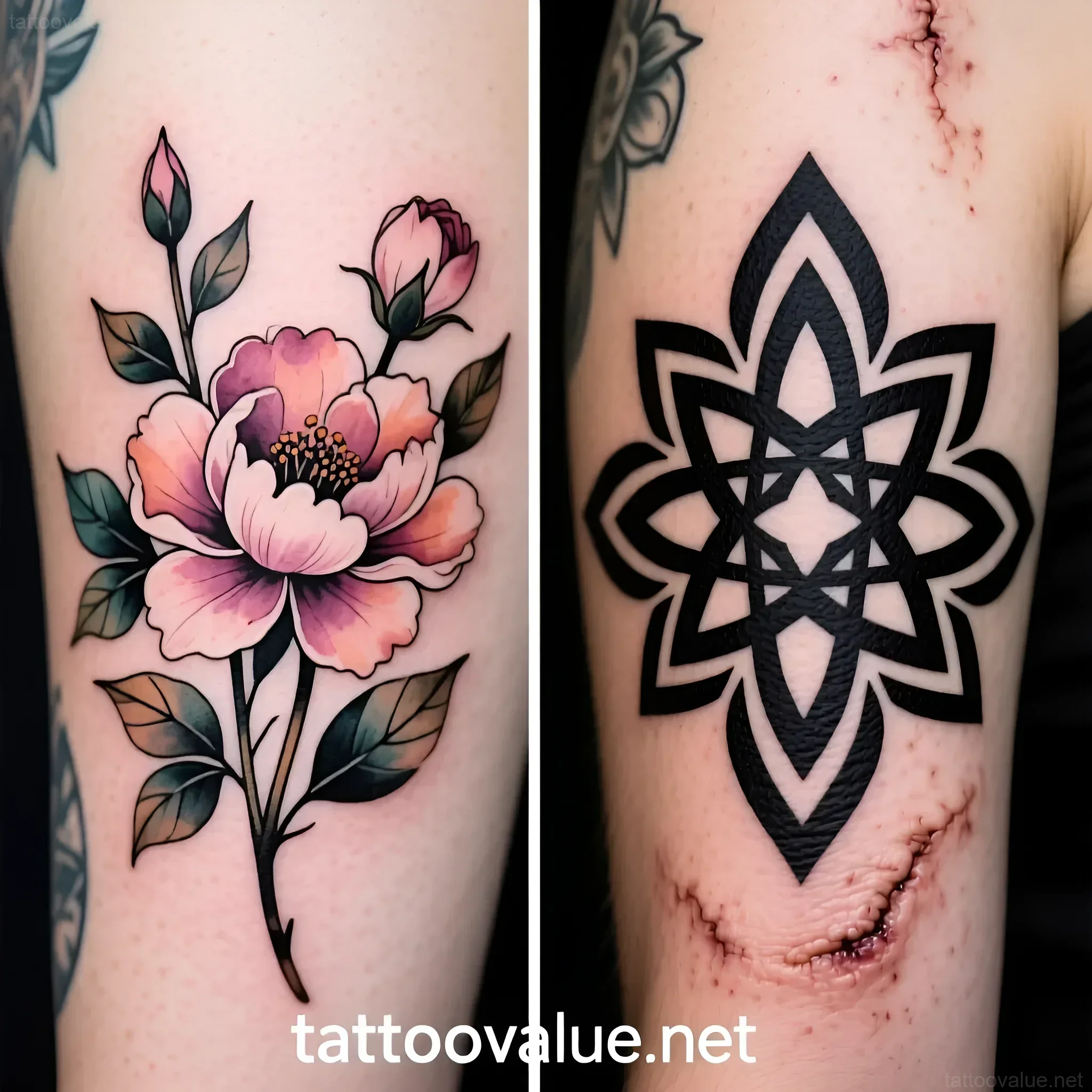
Not all tattoo styles are created equal when it comes to scar coverage. The most successful styles are those that rely on density, strong outlines, and complex visual fields rather than subtle realism or light shading.
Recommended Styles for Coverage
- Blackwork and Ornamental: Arguably the most effective style. The heavy use of solid black fills, strong geometric patterns, and negative space manipulation is unparalleled in masking varied texture and color. The density ensures maximum ink retention across fibrotic tissue.
- Neo-Traditional: This style uses thick, clean lines and bold color palettes, often employing black gradients and solid color packing. The defined structure of Neo-Traditional imagery (animals, flowers, portraits) provides the necessary visual weight to override the underlying scar.
- Japanese (Irezumi): Traditional Japanese tattoos are designed to flow with the body and cover large areas. The use of dense backgrounds (waves, clouds, wind bars) and heavy outlines creates a powerful, cohesive visual field that easily integrates scar lines into the overall composition.
- Abstract and Conceptual: For highly irregular or severely textured scars, abstract designs (like brush strokes, cosmic swirls, or fragmented geometry) work well because the non-linear, chaotic nature of the design mirrors and absorbs the chaotic nature of the scar.
Technical Adjustments for Scar Tissue
The application technique must be modified when working over severe scars:
- Needle Groupings: Magnums (for packing) and tight liners (for definition) are often preferred. Using softer shading needles (like round shaders) can be challenging, as the ink may bleed or fail to saturate properly.
- Depth Control: The artist must be incredibly precise with needle depth. Scar tissue can be unpredictable; too shallow and the ink falls out; too deep, and it can cause blowouts or further damage. This requires an artist highly experienced in scar work.
- Stretching the Skin: Proper stretching is vital. Scar tissue is often inelastic. The artist must stretch the tissue carefully and evenly to allow the needle to penetrate uniformly, preventing skipping or uneven lines.
Before You Ink: Preparation, Artist Selection & Realistic Expectations
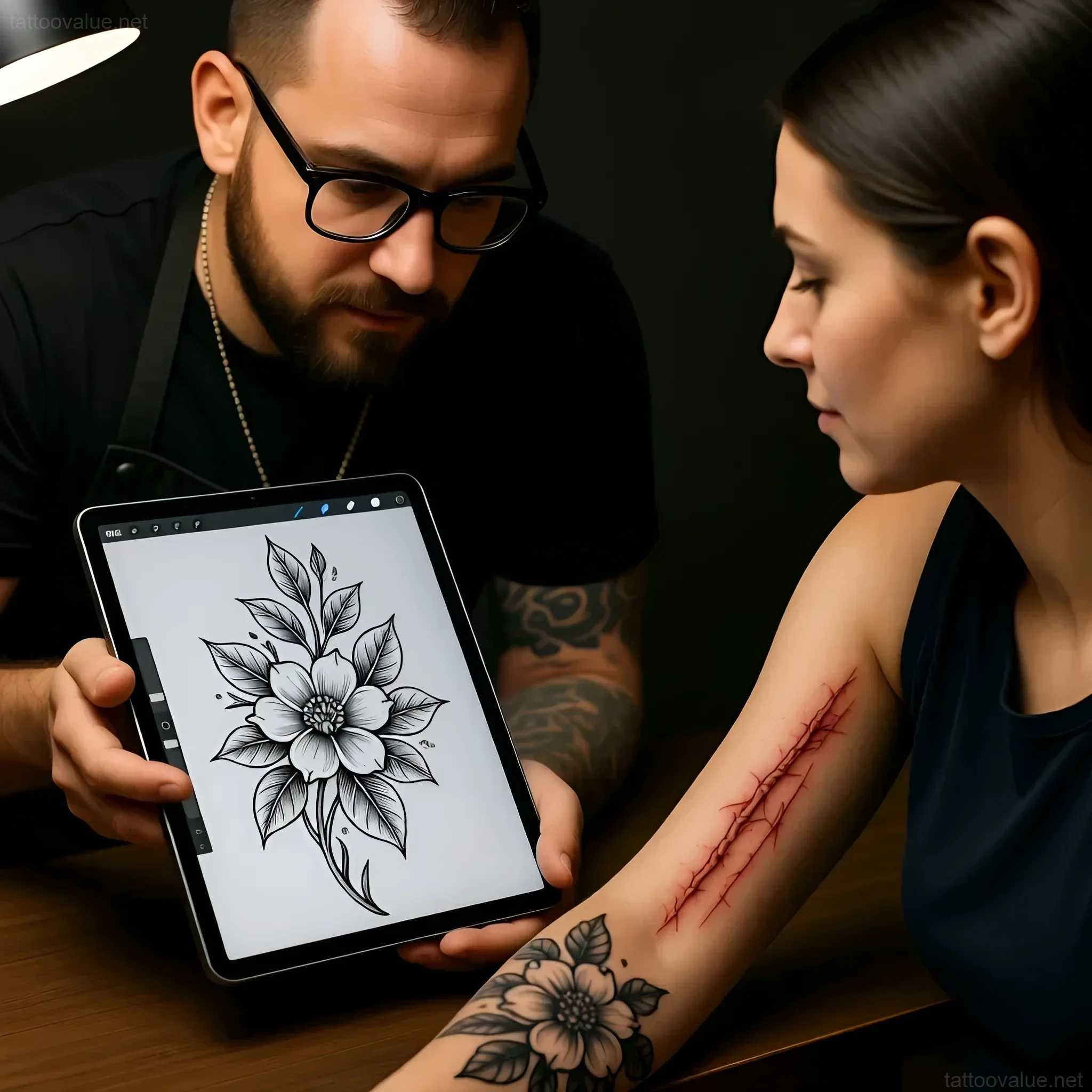
The preparation phase for a scar coverage tattoo is more involved than for standard tattooing. Due diligence in selecting the artist and preparing the skin is paramount to success.
Selecting a Specialized Artist
Do not choose an artist based solely on general aesthetic appeal. You must find someone with a verifiable portfolio of successful scar coverage work. Look for:
- Experience with Texture: The artist should be able to articulate the challenges of tattooing keloids vs. atrophic scars.
- Consultation Depth: A specialized artist will require an in-person assessment of the scar tissue, often touching and manipulating it to gauge pliability and thickness.
- Willingness to Test: An ethical artist may request a small patch test in an inconspicuous section of the scar to observe how the tissue reacts to ink and needle trauma before committing to a full design.
Skin Preparation and Aftercare
Leading up to the session, the scar tissue should be kept hydrated and healthy. Massaging the scar with moisturizing oils (like Vitamin E or cocoa butter) in the months prior can help soften the fibrous tissue, making it more pliable for the tattoo process.
Managing Pain and Sensation
Scar tissue often has altered nerve endings. It can be:
- Hypersensitive: Especially common in surgical scars, the area may be extremely painful due to nerve regeneration.
- Numb: Areas of deep scarring or burn scars may have complete nerve damage, resulting in little to no sensation.
The artist must be prepared to adjust speed and pressure based on the client’s feedback, recognizing that pain is highly variable across the scarred area.
Setting Realistic Expectations
The tattoo will mask the scar’s color, but it cannot completely erase the three-dimensional texture. The goal is transformation—to shift the viewer’s focus entirely to the artwork. Be prepared for:
- Multiple Sessions: Scar tissue often requires layering the ink to achieve proper saturation, necessitating several sessions, sometimes spaced months apart.
- Imperfection: The design may warp slightly or have areas of less density where the scar tissue is particularly dense or thin. Embrace these minor imperfections as part of the unique artistic process.
Inspiring Scar Coverage Tattoo Ideas & Real-Life Transformations
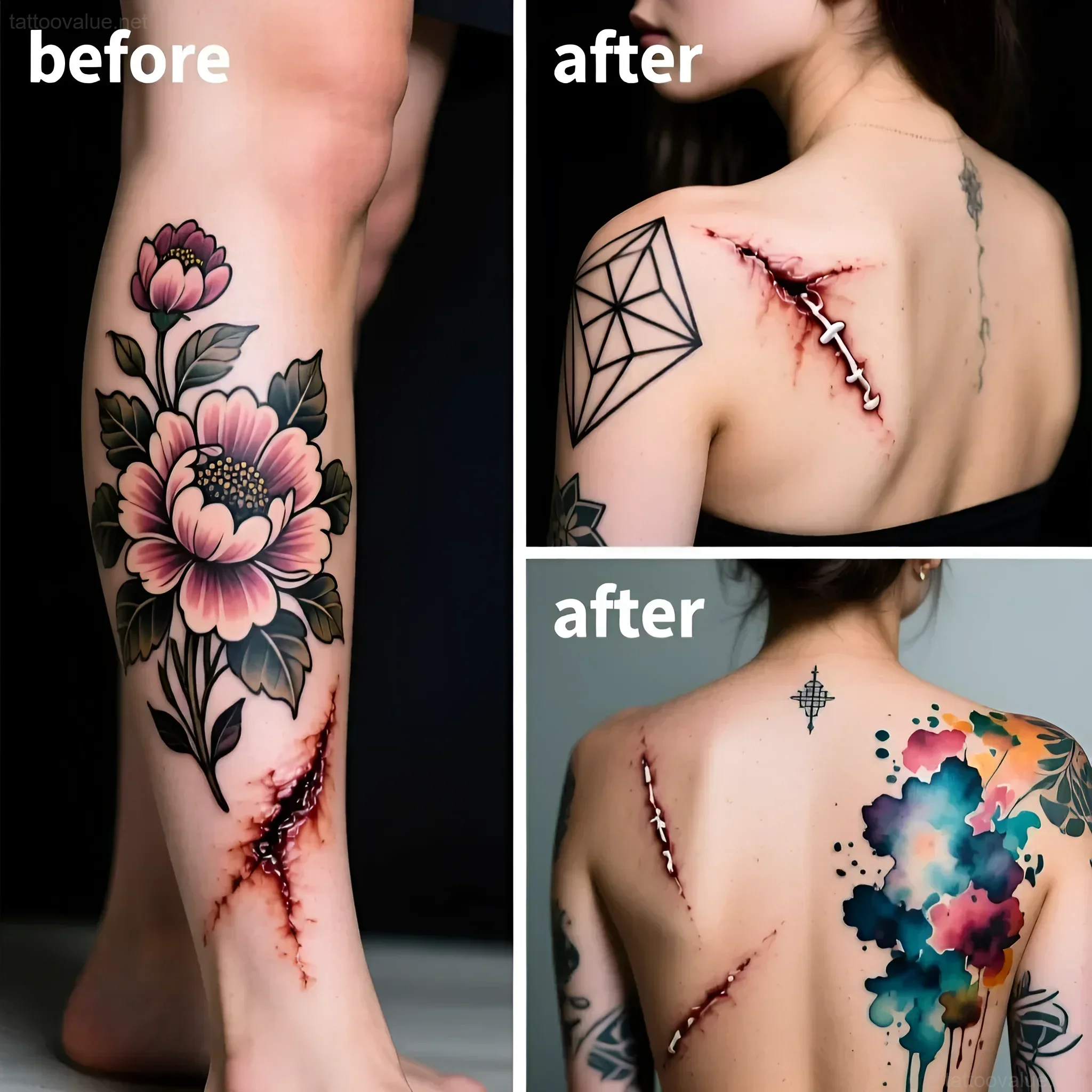
Seeing real-world applications helps solidify design concepts. Here are specific themes and designs that have proven highly effective in transforming difficult scarring:
1. Mastectomy Scars (Focus on Empowerment)
These scars often run horizontally across the chest, or involve significant tissue removal. Designs are typically large, symmetrical, and deeply symbolic.
- Design Idea: A large, symmetrical Tree of Life with roots covering the central scar line and branches spreading across the chest and shoulders. This symbolizes growth, endurance, and life after illness.
- Style Choice: Blackwork or Ornamental; the density of the pattern provides maximum coverage and a feeling of protective armor.
2. Self-Harm Scars (Focus on Healing and Renewal)
These are typically numerous, parallel, linear scars often found on the forearms or thighs. The design must break the visual repetition of the lines.
- Design Idea: Dense, realistic depictions of Wildflowers or Thorns. The flowers represent beauty and growth, while the thorns (or intertwining vines) use their complexity to disrupt the linear pattern of the scars.
- Style Choice: Neo-Traditional or stylized Black and Grey, using heavy saturation and shadow to unify the scarred surface.
3. Severe Burn Scars (Focus on Flow and Texture Simulation)
Burn scars are large, often shiny, and highly textured, frequently covering joints.
- Design Idea: A full-sleeve or full-back coverage using Dragon Scales or Koi Fish swimming through dense water elements. The repetition of scales or waves provides a naturalistic texture that overrides the burn texture.
- Style Choice: Traditional Japanese (Irezumi) is ideal due to its emphasis on background texture (water, wind) and heavy, flowing composition.
4. Deep Surgical Scars (Focus on Integration)
These are often thick, straight lines resulting from major orthopedic or abdominal surgery.
- Design Idea: Incorporate the scar as a deliberate element. The scar might become the Lightning Bolt in a stormy sky, the Stem of a large rose, or the Horizon Line in a landscape piece.
- Style Choice: Graphic Blackwork or Illustrative styles that allow for creative manipulation of the line itself.
Designing a tattoo over severe scarring is a profound collaboration between client and artist. It is the ultimate act of aesthetic and emotional transformation, turning a painful history into a powerful, permanent declaration of strength.