There is no greater compliment to an artist than imitation, but when that imitation becomes unauthorized replication—a blatant theft of intellectual property—it transforms quickly into professional violation. For tattoo artists, whose work is inherently ephemeral yet profoundly permanent, protecting original designs is a constant, demanding battle. Your designs are the culmination of years of study, unique vision, and countless hours of execution. When another artist, or even a client, takes that work and uses it without permission, it is not just frustrating; it’s an attack on your livelihood and artistic identity.
This guide, built from the perspective of the professional tattoo community, is dedicated to providing practical, actionable strategies. We focus on moving past frustration and establishing a robust framework for protection, documentation, and, when necessary, confrontation. We are here to empower you with the tools to defend your unique vision in the complex landscape of modern tattoo culture.
Facing the Inevitable: Dealing with Tattoo Design Copycats – An Introduction
The digital age has amplified the risk of design theft exponentially. What once required tracing paper and a trip to a local shop can now be accomplished with a single right-click. While the tattoo community generally operates on a foundation of respect and unspoken ethical codes, the influx of new artists and the global reach of platforms like Instagram mean that encountering copycats is almost inevitable.
The goal is not to eliminate copying—that’s impossible—but to make copying you specifically difficult, risky, and professionally detrimental to the perpetrator. Our focus shifts from damage control to proactive defense and establishing clear boundaries that your peers and clients will respect.
A History of Imitation in Art & Tattooing: Why Copying Happens
To effectively combat design theft, we must first understand its roots. Art history is filled with apprentices learning by copying masters, and the tattoo industry is no different. Flash sheets were traditionally shared, adapted, and reinterpreted—a necessary component of the craft’s evolution.
However, the modern definition of copying has diverged sharply from traditional adaptation:
- Traditional Adaptation: Taking a concept (e.g., a specific style of Japanese wave or a traditional Sailor Jerry motif) and executing it in a unique, personal manner.
- Modern Copycatting (Theft): Taking a highly specific, finalized, and often digitally rendered design (a custom piece) and reproducing it exactly, or with negligible alteration, often claiming it as original work or offering it to clients at a lower price point.
The rise of hyper-specialized, signature styles (Blackwork geometry, micro-realism portraits, specific illustrative techniques) means that the design itself is often the primary commodity. When a copycat reproduces a detailed piece of your original flash or a client commission, they are stealing the specific intellectual labor you invested into that unique execution, undermining the value proposition you offer.
Understanding Copyright & Intellectual Property for Tattoo Artists
In the United States, UK, and most major Western jurisdictions, tattoo designs are considered original works of authorship and are protected under copyright law the moment they are fixed in a tangible medium (i.e., drawn on paper or digitally rendered).
The Critical Distinction: Style vs. Design
This is the most important legal concept for tattoo artists to grasp:
- Style (Generally NOT Protected): You cannot copyright a technique, a concept, or a general aesthetic (e.g., ‘watercolor style,’ ‘neotraditional,’ or ‘using only red ink’). These are building blocks of the trade.
- Design (Protected): You can copyright the specific arrangement, composition, line work, shading, and unique execution of a specific piece of art (e.g., the exact drawing of a specific geometric wolf head surrounded by customized floral elements).
The Power of Registration
While copyright exists automatically, registration (e.g., with the U.S. Copyright Office) provides significant advantages, particularly for artists who create large volumes of unique flash or publish books of designs:
- Public Record: It provides undeniable, dated proof of ownership.
- Statutory Damages: In the event of litigation, registration allows you to seek statutory damages and attorney’s fees, which are often much higher than simply proving actual monetary loss.
- Injunctions: It makes it easier to obtain a court order to stop the infringing activity immediately.
Expert Tip: Registering individual designs is costly. However, copyright law often allows you to register an entire collection of unpublished works (like a year’s worth of custom flash) under a single application, saving time and resources.
Proactive Protection: Documenting & Establishing Ownership of Your Tattoo Designs
The best defense is an airtight offense. Before you even post a design online, you must establish an undeniable digital and physical paper trail.
1. Digital Fingerprinting and Watermarking
- Layered Watermarks: Use watermarks that are difficult to crop out without destroying the aesthetic. Place them strategically over key compositional elements, not just in the corner.
- Low-Resolution Posting: Post only high-quality images of the finished tattoo, but if you post the original stencil or design drawing (the flash), post it at a resolution that is too low for quality printing or tracing.
- Metadata Integrity: Ensure that the metadata (EXIF data) of your original digital files (PSD, Procreate file) is intact, showing the creation date, time, and your authorship details.
2. Client Contracts and Release Forms
Every professional tattoo artist should use clear contracts that explicitly address intellectual property rights:
Key Contract Clauses to Include:
- Retention of IP: State clearly that the artist retains full copyright and intellectual property rights to the design, even after it is tattooed onto the client.
- Personal Use Only: Specify that the client is only purchasing the right to wear the design on their body (a non-exclusive, non-transferable license).
- No Reproduction Clause: Prohibit the client from reproducing the design for commercial purposes (e.g., selling prints, T-shirts, or commissioning another artist to copy the design onto another person).
- Re-tattooing Policy: If the client needs a touch-up by another artist later (e.g., if they move across the country), ensure the contract stipulates that the original artist must be credited if the image is shared.
3. The Time-Stamped Archive
Maintain a chronological, secure archive of all your designs. Use cloud services (like Google Drive or Dropbox) which automatically time-stamp and track file revisions. If a dispute arises, this archive is your primary evidence of prior creation.
What to Do When You Discover a Copy: A Step-by-Step Guide
Finding a direct copy of your work is disheartening, but a measured, professional response is crucial to maintain credibility and legal standing.
Step 1: Document and Assess the Infringement
- Capture Evidence: Immediately take dated screenshots of the infringing work, including the caption, comments, and the date/time of the post. Document the location (shop name, artist name, and platform).
- Analyze the Degree of Copying: Is it an identical reproduction (a direct rip-off)? Or is it heavily ‘inspired by’ (a derivative work)? Legal action is strongest against direct copying.
Step 2: The Initial Professional Communication
If the artist is local or known within the community, sometimes a direct, non-aggressive message is the fastest solution. Frame it as an ethical issue, not just a legal one.
Example Approach: “I noticed you recently tattooed a design that is a direct copy of my custom piece for Client X. As professionals, we rely on originality. Please remove the image and refrain from using my specific designs in the future.”
Step 3: Utilizing Platform Takedown Notices (DMCA)
Most major social media platforms (Instagram, Facebook, Pinterest) operate under the Digital Millennium Copyright Act (DMCA) and have dedicated reporting tools. This is often the most effective immediate remedy:
- Filing the Claim: Use the platform’s IP infringement form. You must clearly state what original work was copied and provide a direct link to the infringing post.
- Speed and Efficiency: Platforms generally favor the copyright holder and will often remove the content within 24-48 hours, often without requiring extensive legal documentation.
Step 4: Issuing a Formal Cease and Desist Letter
If the artist refuses to comply or if the copying is egregious and commercial, elevate the response to a formal Cease and Desist (C&D) letter, preferably drafted or reviewed by an attorney specializing in IP law. A C&D carries legal weight and demonstrates your seriousness. It demands that the infringer:
- Stop using the specific design immediately.
- Remove all existing images of the copied work from public view.
- Acknowledge the copyright holder.
Building a Reputation & Community: The Best Defense Against Copying
While legal documentation is essential, the most powerful long-term defense against copycats is your professional reputation and the strength of your artistic community.
The Power of Stylistic Integrity
Artists with highly distinct, recognizable styles naturally deter copycats. When your work is immediately identifiable as yours, any blatant copy reflects poorly on the imitator, not on you. Clients seek you out specifically because they want your hand and your interpretation, not a cheap imitation.
Fostering Client Loyalty
Educate your clients about the value of original art. When a client understands they are paying for a unique license to wear a piece of art, they become invested in protecting that exclusivity. They are less likely to shop your design around to cheaper artists and more likely to call out others who copy their tattoo.
The Community Watchdog Effect
The tattoo world is small. When artists respect one another, they act as a mutual defense force. If you maintain ethical standards and publicly support other artists facing theft, your peers are more likely to rally behind you when your work is stolen.
- Call-Outs (Use Sparingly): While public shaming can be effective, it must be handled professionally. Focus on presenting the facts (side-by-side comparison of the original and the copy) rather than resorting to personal attacks.
- Shop Ethics: Work only in shops that enforce strict ethical standards regarding originality and refuse to tattoo designs clearly stolen from other professionals.
Popular Variations of Design Theft & How to Address Them
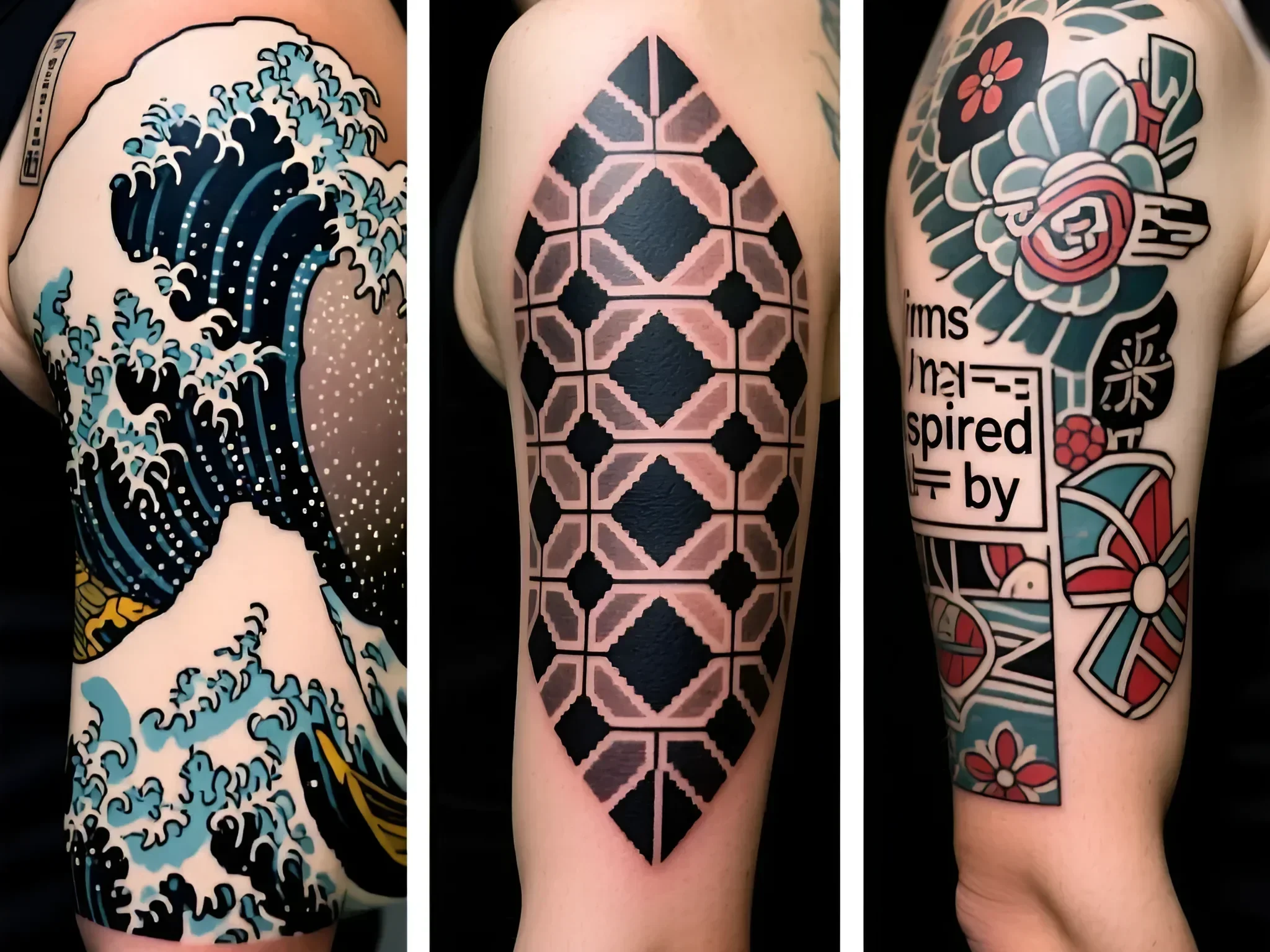
Copying isn’t always a direct 1:1 rip-off. It often comes in subtle, frustrating variations that require different responses.
1. The Direct Copy (The 1:1 Rip-Off)
Description: The thief takes your finished design (or detailed photo of a fresh tattoo) and reproduces it exactly on another client, often without changing the composition, flow, or unique elements.
Response: This is the easiest to prove legally. Proceed directly with a DMCA takedown notice and a C&D letter, citing copyright infringement of the specific artistic execution.
2. The ‘Inspired By’ or Derivative Work
Description: The thief takes your core concept and composition (e.g., a specific pose for an animal, the unique framing of a portrait, or a distinctive color palette combination) and makes minimal changes (reversing the image, swapping one flower for another).
Response: This is harder to fight legally, as copyright protects expression, not ideas. Focus on the ‘substantial similarity’ of the execution. If 70% or more of the unique elements are identical, you still have a strong case. If the changes are significant, the battle shifts to the ethical and reputational realm. Use community pressure to highlight the blatant lack of originality.
3. The Client-Commissioned Copy (The ‘I saw this on Instagram…’)
Description: A client brings your work to another artist, asking them to replicate it exactly, often because your books are closed or your rates are too high. The second artist agrees.
Response: The primary violation rests with the second artist, who knowingly infringed on your IP. While the client is technically breaching their ethical license to the design, focus your efforts on the professional who agreed to replicate the work. Publish a clear studio policy stating you will not copy other artists’ custom work, reinforcing industry standards.
4. Digital Appropriation (Selling Prints/Merchandise)
Description: Your design is lifted from social media and sold as prints, stickers, or digital assets (like Procreate brushes) by a third party who is not a tattoo artist.
Response: This is clear commercial copyright infringement and should be met with immediate legal action and DMCA notices to the hosting platforms (Etsy, Redbubble, etc.). The measurable monetary damages are easier to calculate here, making the case stronger for a lawyer.
Frequently Asked Questions (FAQ) About Tattoo Design Copyright
Q: Does the client own the tattoo design once it’s on their body?
A: No. In the vast majority of jurisdictions, the artist retains the copyright to the artwork. The client owns the skin it’s on, but they only purchase a non-exclusive license to wear the art. They cannot legally reproduce the design or use it commercially without the artist’s explicit permission.
Q: Can I copyright a piece that is a collaboration between two artists?
A: Yes, but it should be clearly documented as a joint work. Both artists should agree in writing (ideally before creation) on how the IP will be managed, including licensing, reproduction, and credit requirements.
Q: If someone copies my style, can I sue them?
A: Generally, no. Style is not copyrightable. You can only sue if they copy the specific composition and execution of a particular design. However, if an artist copies your style so closely that it creates consumer confusion (clients genuinely mistake their work for yours), you might have grounds for a trademark or unfair competition claim, though these are much harder to prove.
Q: What if the copycat is in a different country?
A: International IP enforcement is complex, but the Berne Convention protects original works across most member countries. Your primary tools will still be international DMCA takedowns (social media platforms are global) and public pressure. Pursuing litigation in a foreign court is usually only feasible if the infringement is massive and highly commercial.
Interesting Facts & Cases: Notable Tattoo Copyright Battles
The intersection of body art and intellectual property has led to several high-profile legal clashes, solidifying the idea that tattoo designs are legally protected art forms.
The Sacco v. Warner Bros. Case (The Mike Tyson Tattoo)
Perhaps the most famous example involves S. Victor Whitmill, the artist who designed Mike Tyson’s iconic tribal face tattoo. When Warner Bros. used a nearly identical design on Ed Helms’ character in The Hangover Part II, Whitmill sued for copyright infringement. He argued that the design was an original work and that its reproduction in the film constituted unauthorized use. The case was settled out of court, but a judge granted Whitmill a preliminary injunction, suggesting he had a high likelihood of success on the merits. This case fundamentally established that tattoos are copyrightable and their unauthorized commercial reproduction is actionable.
The NBA 2K and Visual Concepts Lawsuit
In a series of cases, tattoo artists sued video game developers (like Take-Two Interactive, maker of the NBA 2K series) for reproducing the highly visible tattoos of celebrity athletes (e.g., LeBron James, Kobe Bryant) on their digital avatars within the games. The artists argued that this constituted commercial reproduction of their IP. While the developers argued ‘fair use’ (since the tattoos are visible in real life), the courts have often sided with the artists, recognizing that the game is profiting directly from the reproduction of the original artwork. These cases emphasize that when a design is used in a commercial product, the original artist must be licensed and compensated.
Why These Cases Matter to You
These legal battles confirm that copyright protection extends fully to the tattoo medium. They provide professional tattoo artists with a strong legal precedent, ensuring that documentation and proactive protection are not merely optional ethical standards, but necessary business practices in defending your creative output and financial value.