In the highly competitive landscape of modern tattoo artistry, talent is merely the entry fee. To transition from a skilled artisan to a sought-after, high-value professional, you must master the art of branding. Your online presence is no longer a luxury; it is your virtual studio, your primary booking agent, and the first impression that dictates your pricing power and client caliber. Creating a cohesive and professional online brand is the strategic framework that ensures every digital interaction—from a quick scroll on Instagram to a detailed website visit—reinforces your unique value proposition and expertise.
Building Your Tattoo Brand: A Comprehensive Guide to Online Presence
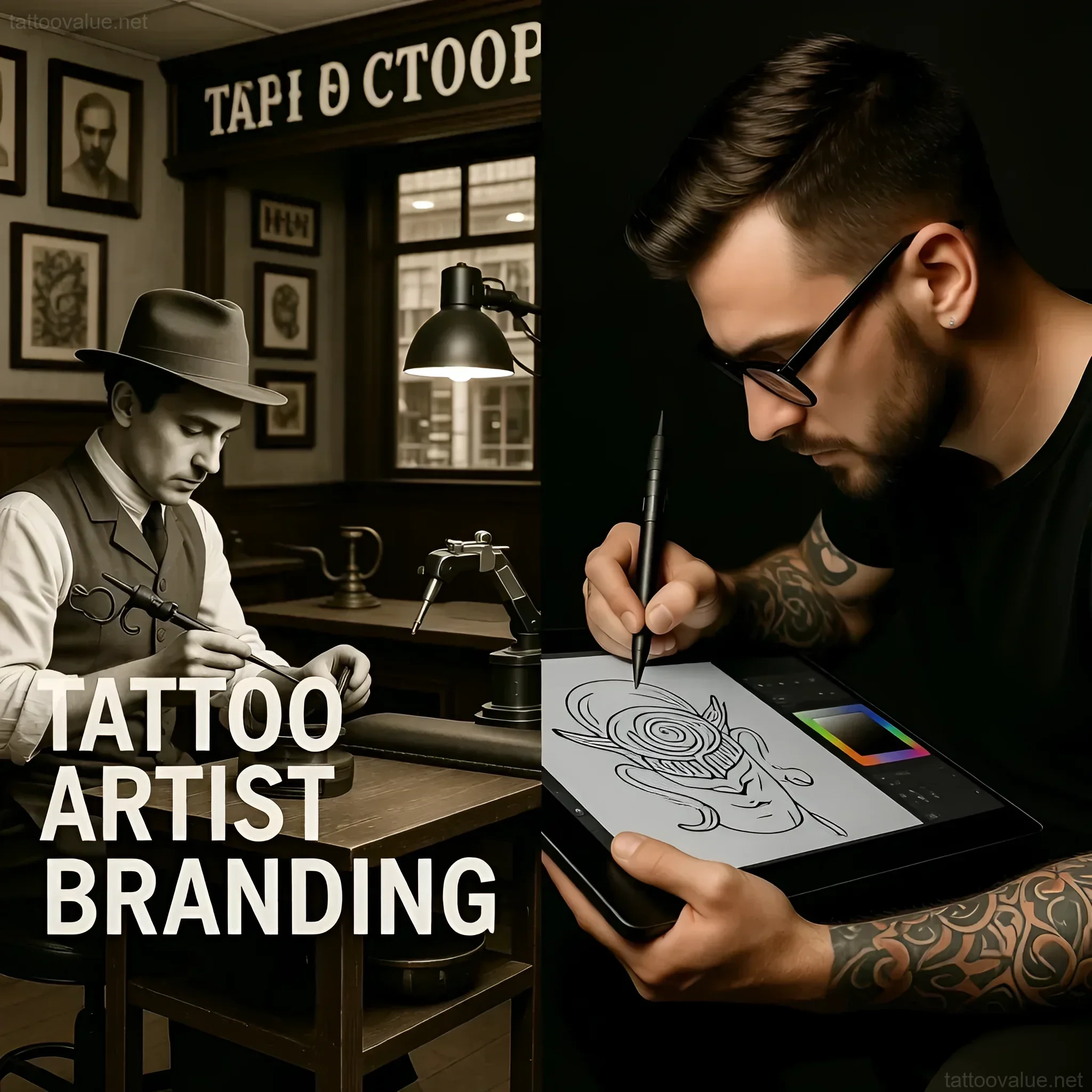
A strong brand for a tattoo professional is not just a logo or a filter; it is the sum total of how the market perceives your work, your professionalism, and your unique style. For Western audiences, who prioritize specialization and clear communication, a chaotic or inconsistent online presence translates directly to risk and lower perceived value.
The goal is to move beyond simply showcasing tattoos and start selling an experience defined by expertise, reliability, and artistic vision. This requires a unified strategy across all digital touchpoints.
- Clarity: Clients must instantly understand your primary style and specialization.
- Trust: Professionalism in communication and presentation builds confidence.
- Authority: Consistent, high-quality content positions you as an expert, justifying premium pricing.
The Evolution of Tattoo Artist Branding: From Word-of-Mouth to Digital Domination
Historically, a tattoo artist’s brand was built on street reputation, shop visibility, and word-of-mouth referrals. The digital revolution has changed this equation entirely. While reputation remains vital, the initial discovery phase is now almost exclusively digital. The modern client typically finds, vets, and decides on an artist before ever stepping foot in the studio.
The challenge for established and emerging artists alike is translating the tactile, intimate studio experience into a compelling digital narrative. This evolution demands a shift in focus:
- From Local Visibility to Global Reach: Social media allows artists to attract clients willing to travel for their specialized style.
- From Passive Waiting to Active Curation: Artists must actively curate their portfolio and narrative, rather than waiting for the right client to walk in.
- From Generalist to Specialist: The digital world rewards niche expertise. Branding is the tool used to highlight and market that specialization (e.g., specializing only in ornamental blackwork or neo-traditional wildlife).
Expert Insight: Your digital footprint is your most powerful asset. Every post, story, and website image must be intentional, serving the larger goal of brand elevation.
Defining Your Tattoo Brand Identity: Core Values, Target Audience & Unique Selling Proposition
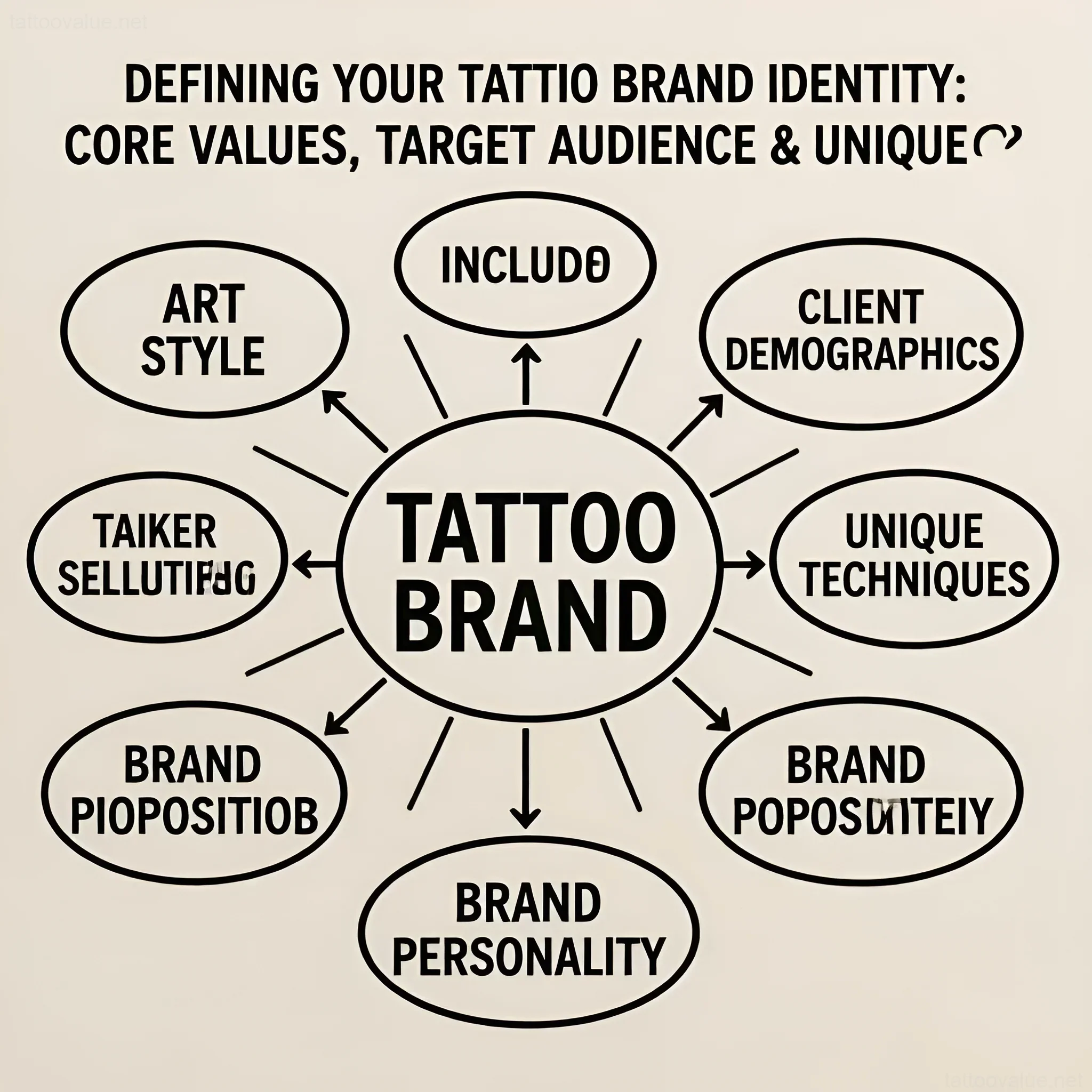
Before designing a logo or posting a single photo, you must define the foundation of your brand. Cohesion starts here—by understanding who you are, who you serve, and what makes you irreplaceable.
1. Identify Your Core Values
What principles guide your work and client interactions? These values should permeate your communication style and studio policies.
- Precision and Detail: (Reflected in detailed captions, focus on healed photos, and meticulous booking process).
- Authenticity and Tradition: (Reflected in respect for cultural roots, historical context in designs, and use of traditional methods).
- Client Comfort and Safety: (Reflected in extensive aftercare guides, clear hygiene protocols, and empathetic communication).
2. Define Your Target Audience (The Ideal Client)
Who is the client that values your specialization and is willing to pay your premium rates? Targeting everyone means reaching no one.
| Niche Style Example | Target Client Profile | Branding Focus |
|---|---|---|
| Black & Grey Surrealism | 30-50, urban professionals, values fine art, seeks large-scale, conceptual pieces. | High-contrast photography, intellectual captions, emphasis on design consultation. |
| Minimalist Fine Line | 22-35, appreciates subtlety, values high-end aesthetic, often first-time clients. | Clean website design, focus on healed simplicity, clear pricing structure for small pieces. |
3. Establish Your Unique Selling Proposition (USP)
Your USP is the single reason a client should choose you over the hundreds of other artists in your region. It must be specific and demonstrable.
- Poor USP: “I do great tattoos.”
- Strong USP: “I am the only artist in the Northeast specializing in high-contrast, botanical realism using only single-needle techniques.”
- Strong USP: “I specialize in respectful, detailed cover-ups, focusing on restoring confidence through large-scale Japanese work.”
Crafting a Visual Brand: Logo Design, Color Palettes & Consistent Imagery for Tattoo Artists
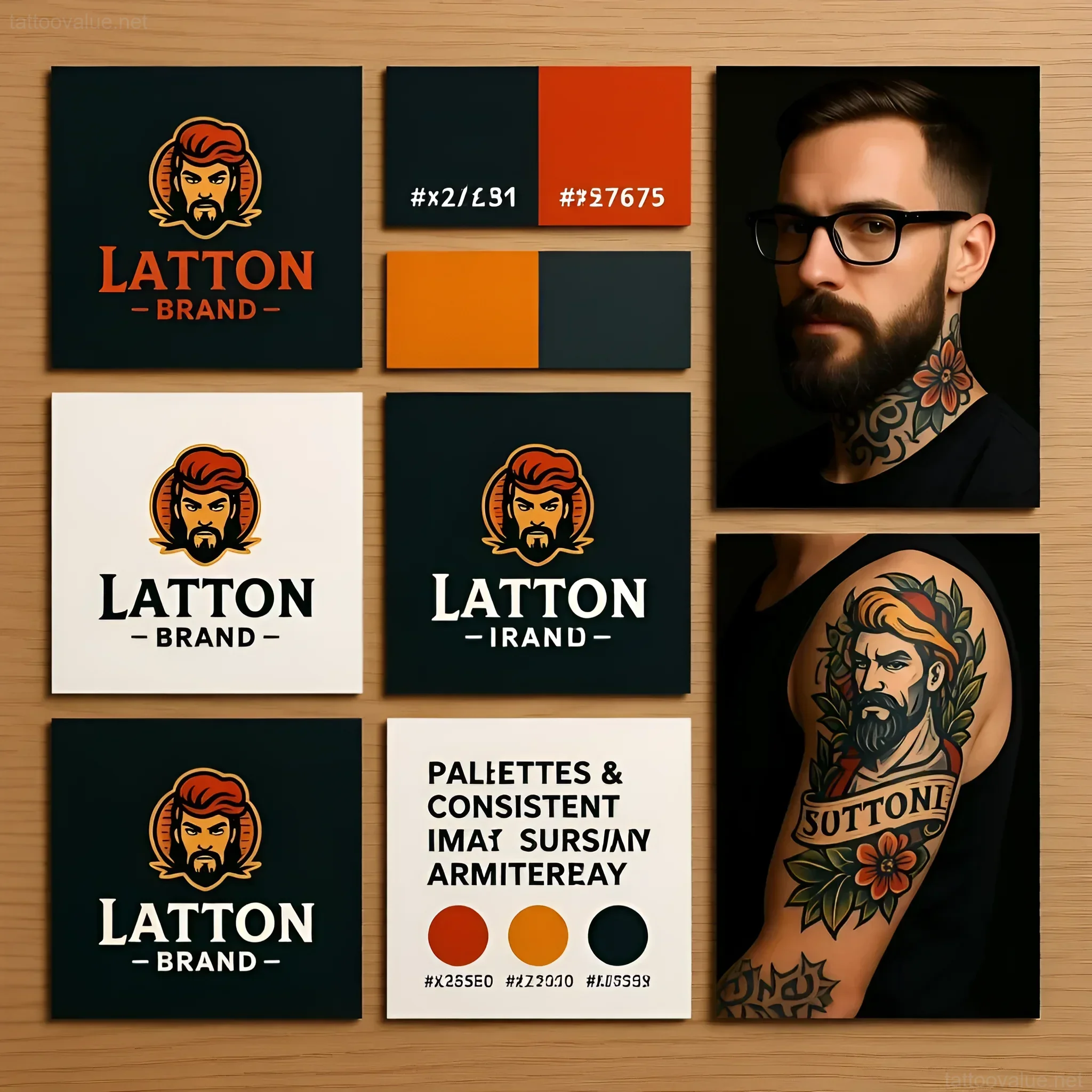
The visual identity is the most immediate and powerful expression of your brand. Cohesion here means that whether a client sees your booking confirmation email, your Instagram story, or your business card, the aesthetic is instantly recognizable and aligned with your specialty.
Logo and Typography
Your logo should subtly reflect your style, not distract from your art. If you specialize in delicate script, avoid heavy, gothic fonts in your branding. If you are a traditional artist, leaning into classic American tattoo typography reinforces your specialization.
- Minimalism: For fine line or micro-realism artists, a simple, elegant wordmark or a geometric symbol often works best.
- Character: Traditional or Neo-Traditional artists can incorporate classic elements (e.g., swallows, roses) into a badge or crest design.
Color Palettes and Mood
The colors you use on your website, social media highlights, and printed materials set the emotional tone:
- Blackwork/Dark Art: Deep charcoal, matte black, and subtle hints of aged parchment or muted gold convey seriousness and depth.
- Vibrant Color Work: Use a neutral background (white/grey) and let your art provide the color, using one or two secondary brand colors (e.g., teal, burnt orange) for accents and text.
- Fine Line/Feminine Styles: Soft greys, blush pinks, or metallic silver suggest elegance and delicacy.
The Critical Role of Consistent Imagery
The biggest failure point for many artists is inconsistent photography. A professional brand demands studio-quality photos of your work, every time.
Checklist for Visual Consistency:
- Lighting: Use consistent, diffused lighting. Avoid harsh shadows or overly edited filters that distort the ink color.
- Background: Standardize your background (e.g., a clean white wall, a specific wood grain, or a neutral grey backdrop). The focus must always be the tattoo, not the distracting environment.
- Angles: Take standardized close-up, medium, and wide shots for every piece.
- Healed vs. Fresh: Clearly label photos. Showing high-quality, fully healed work is the ultimate testament to your skill and professionalism.
Strategic Social Media for Tattoo Artists: Platforms, Content Pillars & Engagement Tactics
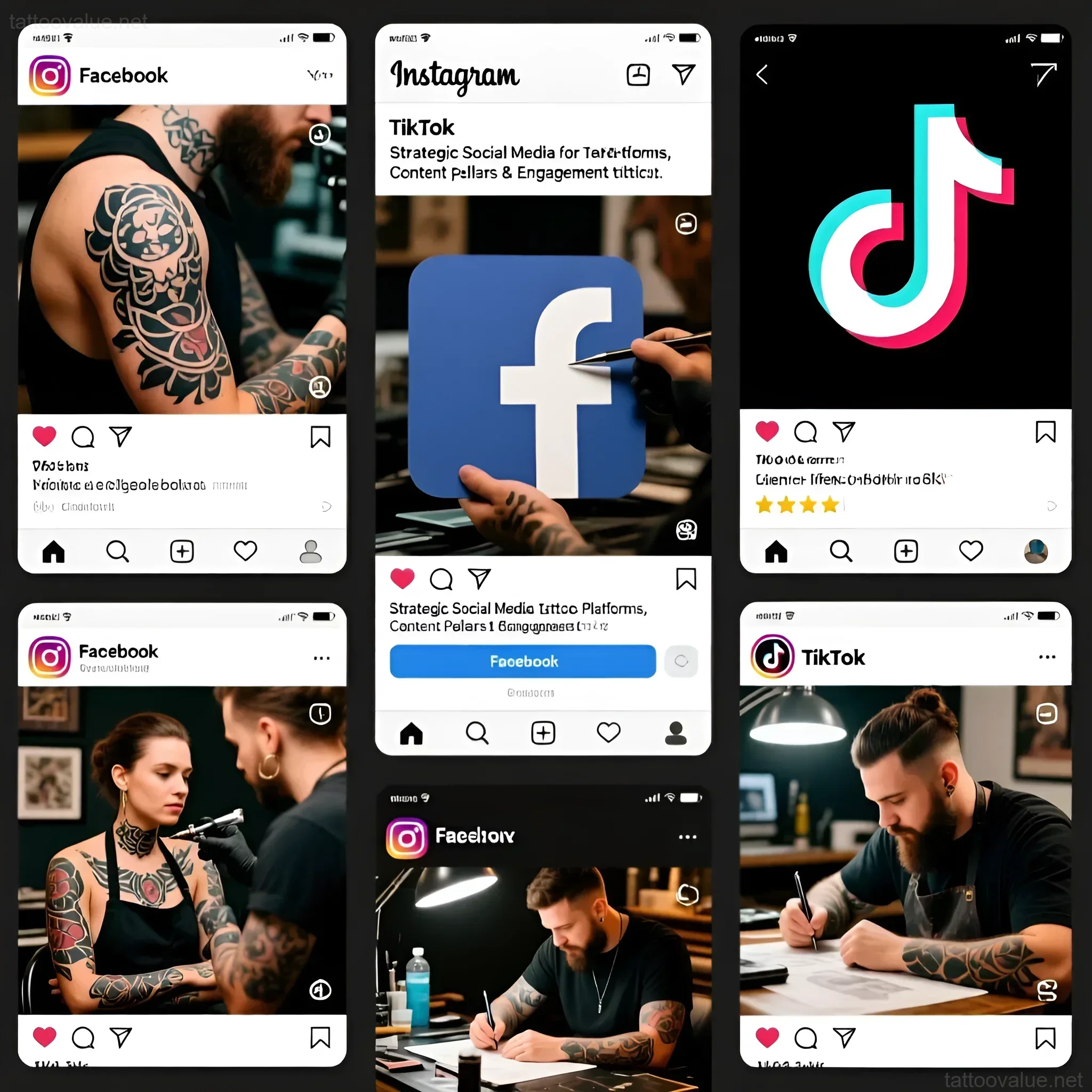
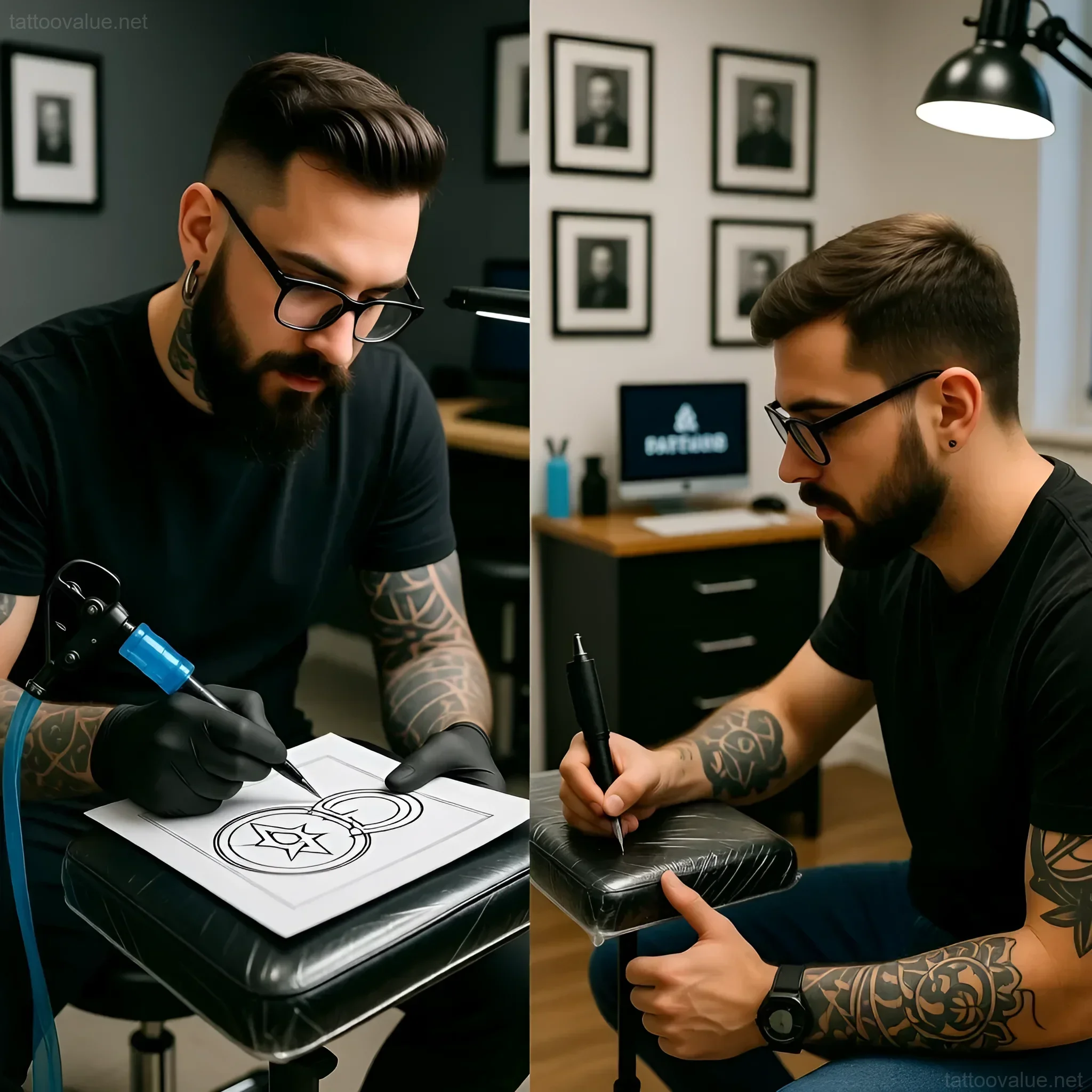
Social media platforms are the primary storefronts for tattoo artists. A cohesive brand uses each platform strategically, recognizing that while the core identity remains the same, the content format must adapt.
Platform Specialization
- Instagram: (The Portfolio) Focus on high-resolution, static images and short, stylized reels. This is where clients browse your catalog and assess your visual consistency. Use the bio for clear calls to action (CTAs) and booking links.
- TikTok/Reels: (The Personality/Process) Use short-form video to show your studio environment, your personality, client interactions (with permission), and the drawing/stenciling process. This builds connection and reduces the intimidation factor.
- Pinterest: (Long-Term Search & Inspiration) Use Pinterest to categorize your work by style (e.g., ‘Japanese Back Pieces,’ ‘Geometric Sleeves’). This acts as a long-term SEO tool, catching clients in the early inspiration phase.
Establishing Content Pillars
Content pillars are the recurring themes that provide structure and ensure you are communicating your brand values effectively.
Essential Content Pillars for Tattoo Artists:
- The Masterpiece Showcase: Fresh and healed work (80% of content).
- The Educational Expert: Aftercare tips, studio hygiene facts, tattoo history, or debunking myths (Builds authority).
- The Process & Behind-the-Scenes: Time-lapses, drawing sessions, stencil application, consultation insights (Humanizes the brand).
- Availability & Flash Drops: Clear CTAs for cancellations, open books, or pre-drawn designs (Drives immediate bookings).
- Client Experience & Testimonials: Showcasing the final, delighted client (with permission) or sharing compelling written reviews (Builds trust).
Engagement Tactics for Professionals
Engagement must reflect your professional brand tone. If your brand is serious and refined, your replies should be articulate and polite.
- Clear Inquiry Process: Use story highlights and pinned posts to direct all booking questions to the correct channel (website form/email). Avoid managing bookings via DMs.
- Educational Captions: Use captions not just to describe the tattoo, but to explain the artistic choices, the client’s journey, or the required healing time. This reinforces expertise.
- Handling Criticism: Respond to negative feedback or trolls with professional silence or a brief, polite defense of your policies. Do not engage in public arguments; it destroys brand cohesion.
Website Essentials for Tattoo Artists: Portfolio Showcase, Booking Systems & SEO Optimization
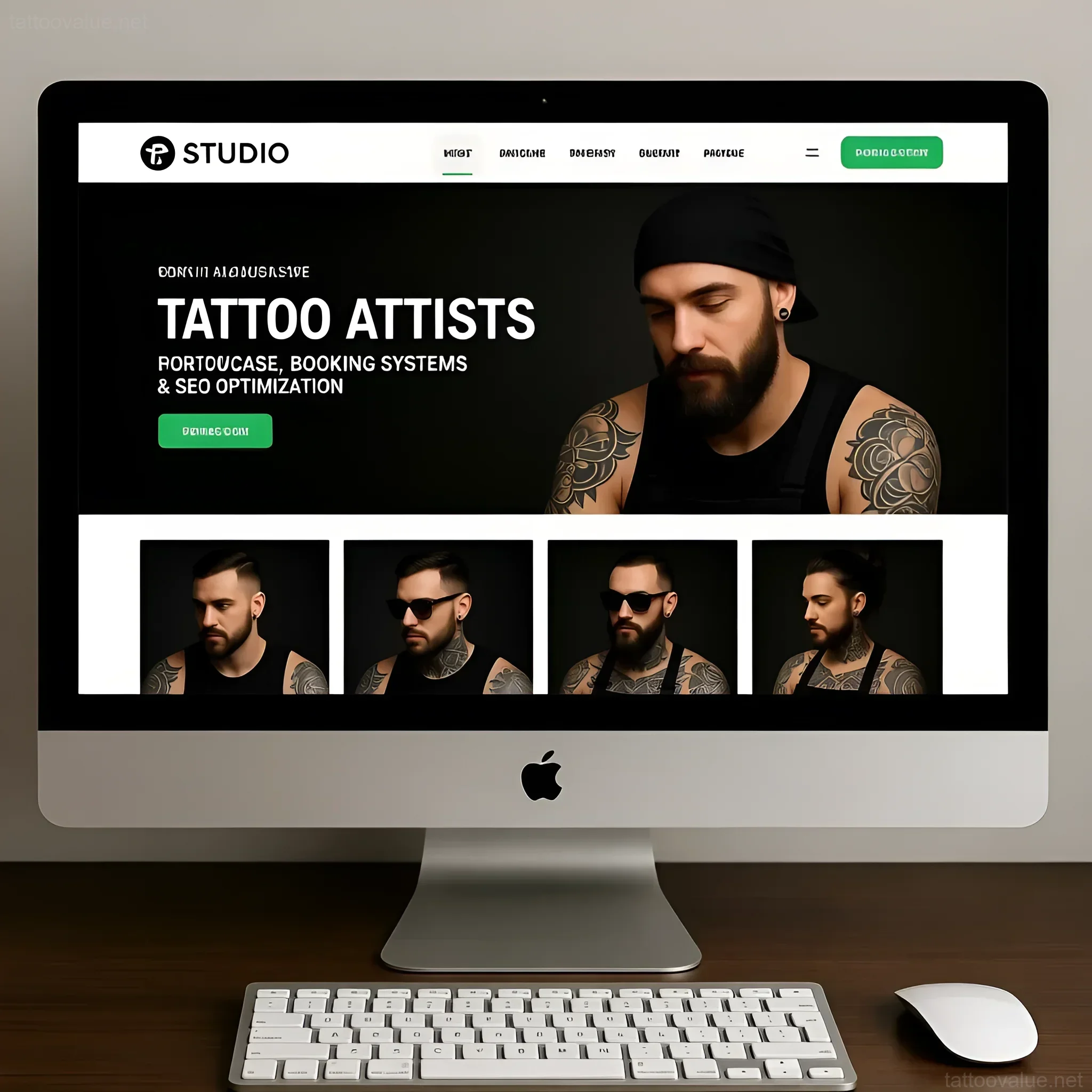
While social media drives discovery, your professional website is the conversion engine. It is the only platform you fully control, and it must serve as the authoritative hub for your brand.
The High-Converting Portfolio Showcase
The website portfolio must be curated more tightly than social media. Organize work by style, subject matter, or size (e.g., Sleeves, Cover-ups, Floral). Ensure fast loading times—clients will abandon a slow site.
- High-Resolution Gallery: Use optimized images that maintain quality but load quickly.
- Filterability: Allow potential clients to filter work easily (e.g., by Blackwork, Color, Geometric).
- Context: Include brief descriptions detailing the size, placement, and time taken for major pieces.
Streamlined Booking Systems
A professional brand requires a professional booking funnel. Eliminate the back-and-forth email chaos that frustrates clients and wastes your time.
- Dedicated Booking Form: Use a detailed, mandatory form that collects all necessary information (placement, size in inches/cm, reference photos, budget range).
- Integration: Integrate professional scheduling software (like Acuity Scheduling, Booksy, or Calendly) for deposit collection and automated reminders.
- Policy Transparency: Clearly display cancellation policies, deposit requirements, and hourly/day rates (or minimum fees) on a dedicated FAQ page.
Local SEO Optimization
For a service-based business like tattooing, local SEO is paramount. You need clients searching for your style in your city to find you.
SEO Action Points:
- Keywords: Use specific, high-intent keywords in your titles, URLs, and image alt texts (e.g., “Neo-Traditional Tattoo Artist Brooklyn NY,” “Fineline Floral Tattoos London.”)
- Google My Business (GMB): Maintain a verified, optimized GMB profile with high-quality photos, accurate opening hours, and consistent review management.
- Location Consistency: Ensure your Name, Address, and Phone number (NAP) are identical across your website, social media, and GMB.
Maintaining Brand Consistency & Professionalism: Communication, Client Interactions & Online Reputation Management
Cohesion is tested most severely in the day-to-day operations. A stunning portfolio is meaningless if the client receives a rude email or finds your studio disorganized. Brand consistency means that the client experience matches the promise of your marketing.
Consistent Communication Tone
The voice used in your Instagram captions should be the same voice used in your appointment confirmation emails.
- If your brand is approachable and playful, use friendly, conversational language in emails.
- If your brand is serious and art-focused, use precise, formal language regarding concepts and policies.
Automation Tools: Use email templates for common responses (deposits, aftercare, initial consultation requests). This ensures consistency and saves time while maintaining a professional appearance.
Managing Online Reputation
Reviews on Google, Yelp, and social media comments are critical components of your brand narrative. They are user-generated proof of your professionalism.
- Solicit Reviews: Politely ask happy clients to leave a review on GMB or Facebook shortly after the tattoo heals.
- Address Negative Feedback Calmly: If a negative review occurs, respond publicly once, professionally, and factually, without getting defensive. Focus on problem resolution, not winning the argument. (Example: “We understand your frustration regarding the rescheduling fee. Our policy is clearly stated on our website to protect the time reserved for all clients.”)
- Privacy & Ethics: Never post a client’s personal details or negative interactions publicly. Maintaining client privacy is a core pillar of professionalism.
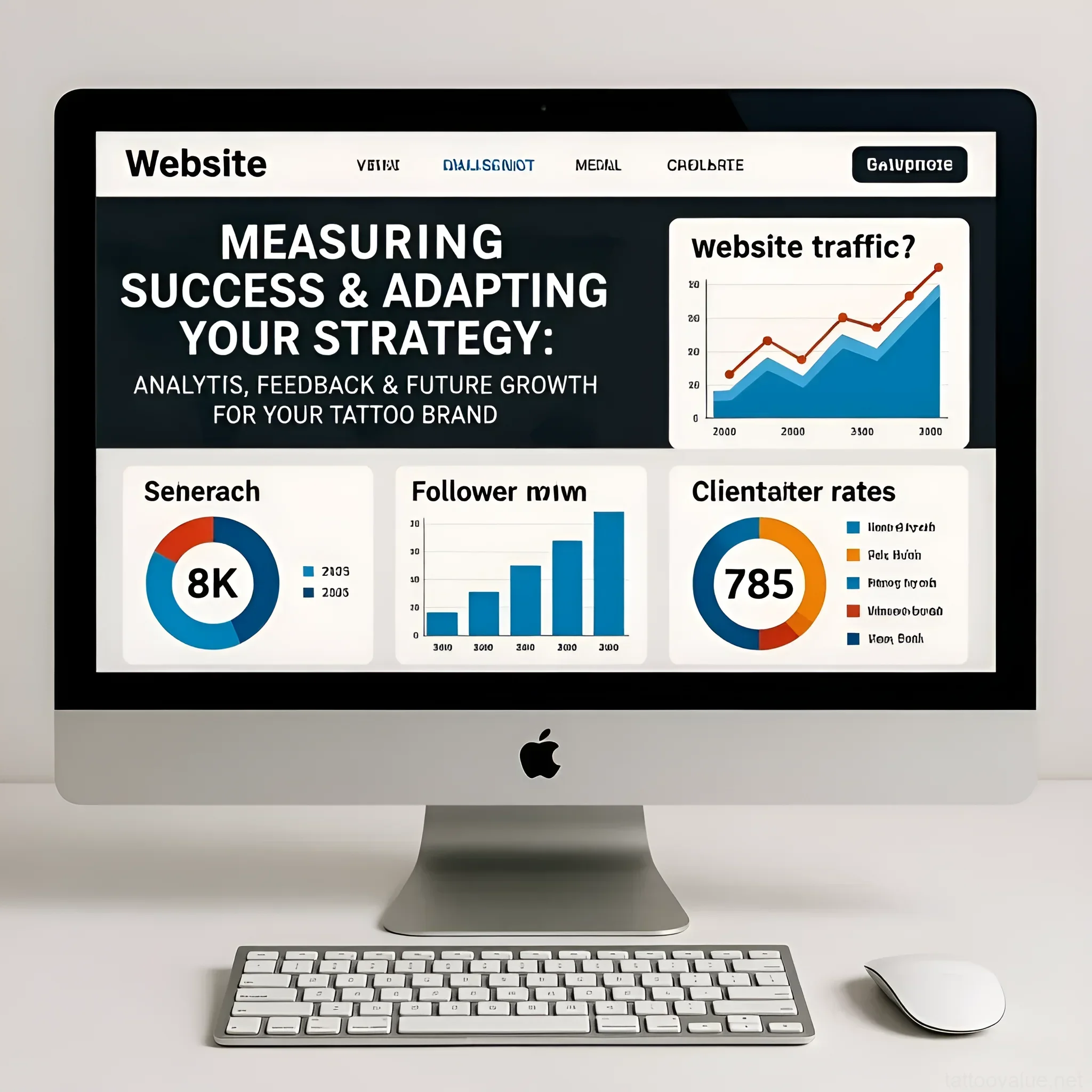
Measuring Success & Adapting Your Strategy: Analytics, Feedback & Future Growth for Your Tattoo Brand

A professional brand strategy is iterative, not static. You must regularly analyze what is working, what isn’t, and how your market perception is evolving.
Key Performance Indicators (KPIs) Beyond Follower Count
Focus on metrics that directly impact your bottom line and brand authority:
- Inquiry-to-Booking Conversion Rate: How many initial contacts result in a paid deposit? A low rate suggests a disconnect between your brand image (attracting inquiries) and your booking process (converting them).
- Average Project Value (APV): Is your branding attracting clients willing to commit to larger, higher-priced sessions? Growth in APV indicates successful brand elevation.
- Source Traffic: Where are your best clients coming from (Website SEO, Instagram, Referrals)? Double down on the highest-converting channels.
- Engagement Rate (ER): High ER indicates your content resonates deeply with your ideal audience, fostering loyalty and reach.
Gathering and Utilizing Feedback
Treat client feedback as market research for your brand.
- Post-Tattoo Survey: Send a brief, automated survey asking about their experience, from the booking process to the studio atmosphere.
- Listen to the Language: What words do clients use to describe your work? If they consistently use words like “meticulous,” “clean,” or “art gallery quality,” incorporate those descriptors into your official brand messaging.
Frequently Asked Questions (FAQ) About Tattoo Artist Branding
Q: How often should I re-evaluate my brand identity?
A: You should conduct a formal brand audit every 18–24 months, or immediately if you shift your artistic style significantly (e.g., moving from color realism to black and grey). Day-to-day monitoring of analytics should be continuous.
Q: Should I use my real name or a studio/brand name?
A: For high-end specialization, using your personal name (e.g., ‘Artist Name Tattoo’) is often more effective, as clients are buying into the prestige of the individual artist. If you plan to scale into a multi-artist studio, a distinct brand name is necessary, but the individual artist must still maintain a strong personal presence under that umbrella.
Q: Is it okay to post non-tattoo content (e.g., personal life) on my professional accounts?
A: Yes, but strategically. Personal content builds connection and trust (Pillar 3: Humanizing the Brand). However, it must align with your core values. If your brand is highly professional, avoid excessive or controversial personal posts. Showcasing hobbies (like painting, sculpture, or travel) that feed into your artistic sensibility is usually beneficial.
Q: How do I handle clients who request a style I don’t specialize in?
A: A professional brand refers the client to an artist who does specialize in that style. This reinforces your own specialization and builds trust within the industry. Use a polite, standardized referral response.
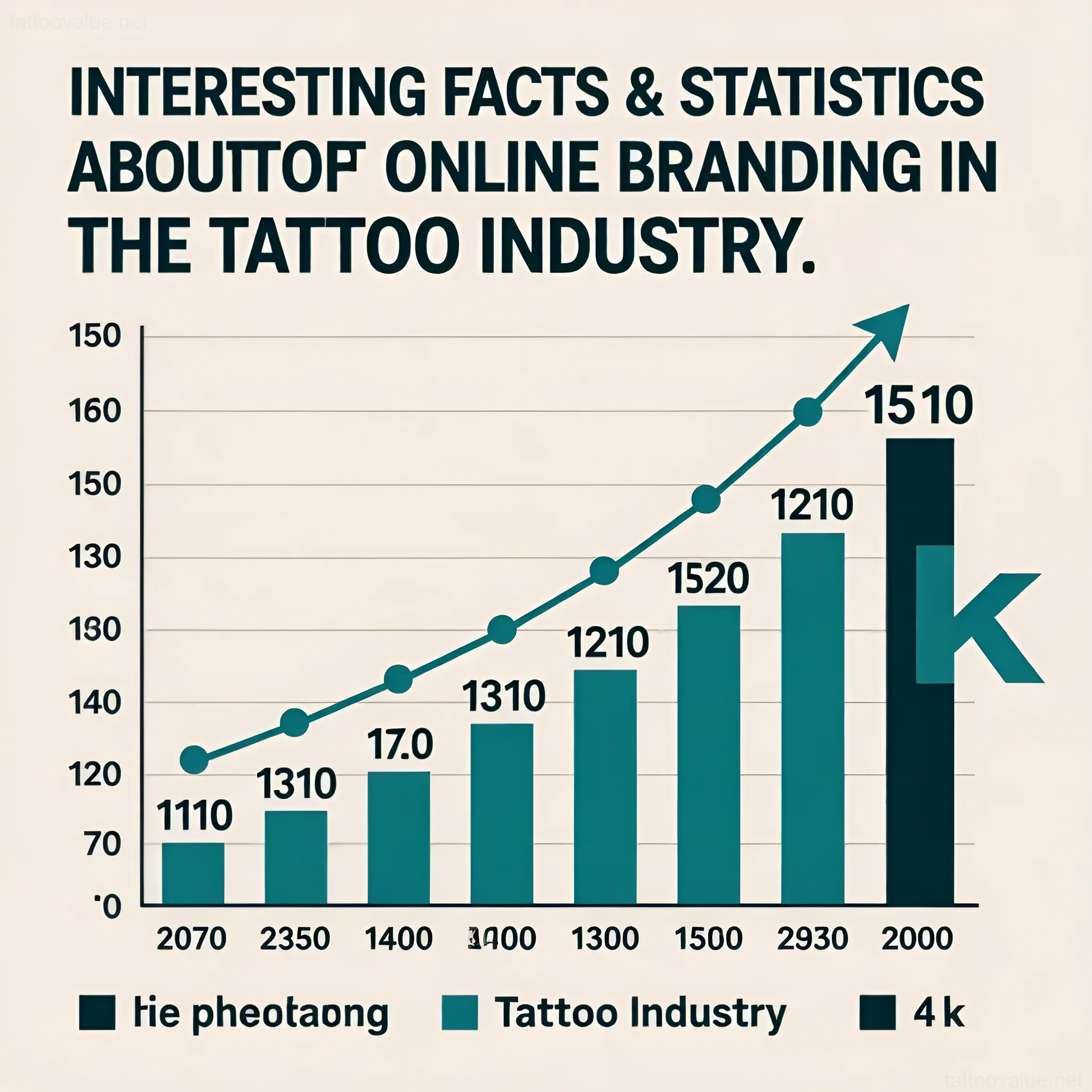
Interesting Facts & Statistics About Online Branding in the Tattoo Industry
The digital landscape provides measurable evidence of the necessity of cohesive branding:
- Conversion Lift from Professional Photography: Studies show that professional, high-quality product photography (or in this case, tattoo photography) increases conversion rates by up to 40% compared to amateur photos, directly impacting booking rates.
- Mobile Dominance: Over 75% of initial tattoo research and artist portfolio viewing occurs on mobile devices. If your website and booking forms are not perfectly mobile-responsive, you are losing a significant portion of your potential clientele.
- The Power of the Niche: Artists who clearly define their niche (e.g., “dotwork mandala artist”) and reflect it consistently in their branding typically charge 20–50% higher rates than generalist artists in the same geographic area, due to perceived scarcity and expertise.
- The Review Economy: GMB profiles with 10 or more recent, positive reviews see a 30% increase in click-through rates (calls, website visits, directions) compared to profiles with few reviews. Consistent client experience management is essential for local search visibility.