In the highly demanding world of tattooing, precision is non-negotiable. A single slip, a moment of distraction, or persistent fatigue can compromise hours of painstaking work. While we often focus on the quality of the machine, the pigment, and the needle grouping, one of the most underrated tools in a modern tattoo studio is the equipment that manages the sonic environment: noise-cancelling headphones.
For the artist, these headphones silence the monotonous, high-frequency drone of the rotary or coil machine, allowing for deep, uninterrupted concentration. For the client, they are a lifeline—a crucial bridge to mental endurance that transforms a grueling, painful session into a manageable, often meditative, experience. This is not just about listening to music; it’s about creating a personal sonic sanctuary essential for enduring marathon sessions.
1. Why Noise-Cancelling Headphones are a Tattoo Artist’s (and Client’s!) Best Friend
The tattoo environment is inherently loud. The constant, repetitive buzz of the machine operates at a frequency that is specifically designed to grate on the nerves over time. Furthermore, studios are rarely silent—chatter, street noise, ventilation systems, and background music all contribute to a cumulative soundscape that drains cognitive resources. This is where high-quality Active Noise Cancellation (ANC) becomes an indispensable professional tool.
For the Artist: Precision and Endurance
- Focus Retention: Tattooing is micro-detail work. ANC eliminates auditory distractions, allowing the artist to maintain ‘the zone’ for 8, 10, or even 12 hours straight. This directly translates to higher quality line work and shading consistency.
- Hearing Protection: Long-term exposure to the high-pitched drone of tattoo machines can lead to cumulative hearing fatigue and potential damage. ANC allows the artist to listen to their preferred audio at much lower, safer volumes.
- Rhythm and Flow: Many artists use their headphones to listen to specific playlists or podcasts that help them maintain a consistent, physical rhythm, treating the session almost like a dance or surgical procedure.
For the Client: Comfort and Mental Escape
- Pain Management: The sound of the needle hitting the skin is often more anxiety-inducing than the physical sensation itself. By masking this sound, clients can drastically reduce their perceived pain and anxiety levels.
- Endurance Catalyst: During full-day sessions (6+ hours), mental fatigue sets in long before physical tolerance runs out. Headphones offer a vital escape, allowing the client to consume entertainment, meditate, or simply rest their mind, making the session feel shorter.
- Privacy: Headphones signal that the client is engaged in their own process, discouraging unnecessary chatter and allowing them to manage their physical response to pain privately.
2. A Brief History of Noise Cancellation & Its Rise in the Tattoo Industry
Noise cancellation technology isn’t new. It was initially developed in the late 1970s, primarily by Dr. Amar Bose, who sought to reduce the relentless engine noise experienced by pilots. Early applications were strictly military and aviation focused, designed to protect communication clarity and hearing in extreme high-noise environments.
The technology entered the consumer market in the 1990s, primarily targeting frequent flyers. However, its adoption in specialized trade environments like tattooing is a more recent phenomenon, coinciding with the rise of the specialized, high-end studio experience.
The shift occurred as tattoo sessions became longer, more complex, and thus more mentally taxing. Artists recognized that investing in their focus environment—not just their tools—was key to producing master-level pieces. Today, providing high-quality ANC headphones for clients is seen as a mark of professionalism and commitment to the client’s comfort, transforming the studio from a noisy workspace into a controlled, therapeutic environment.
3. Understanding Noise Cancellation Technologies: ANC vs. Passive Isolation – What Matters for Tattooing?
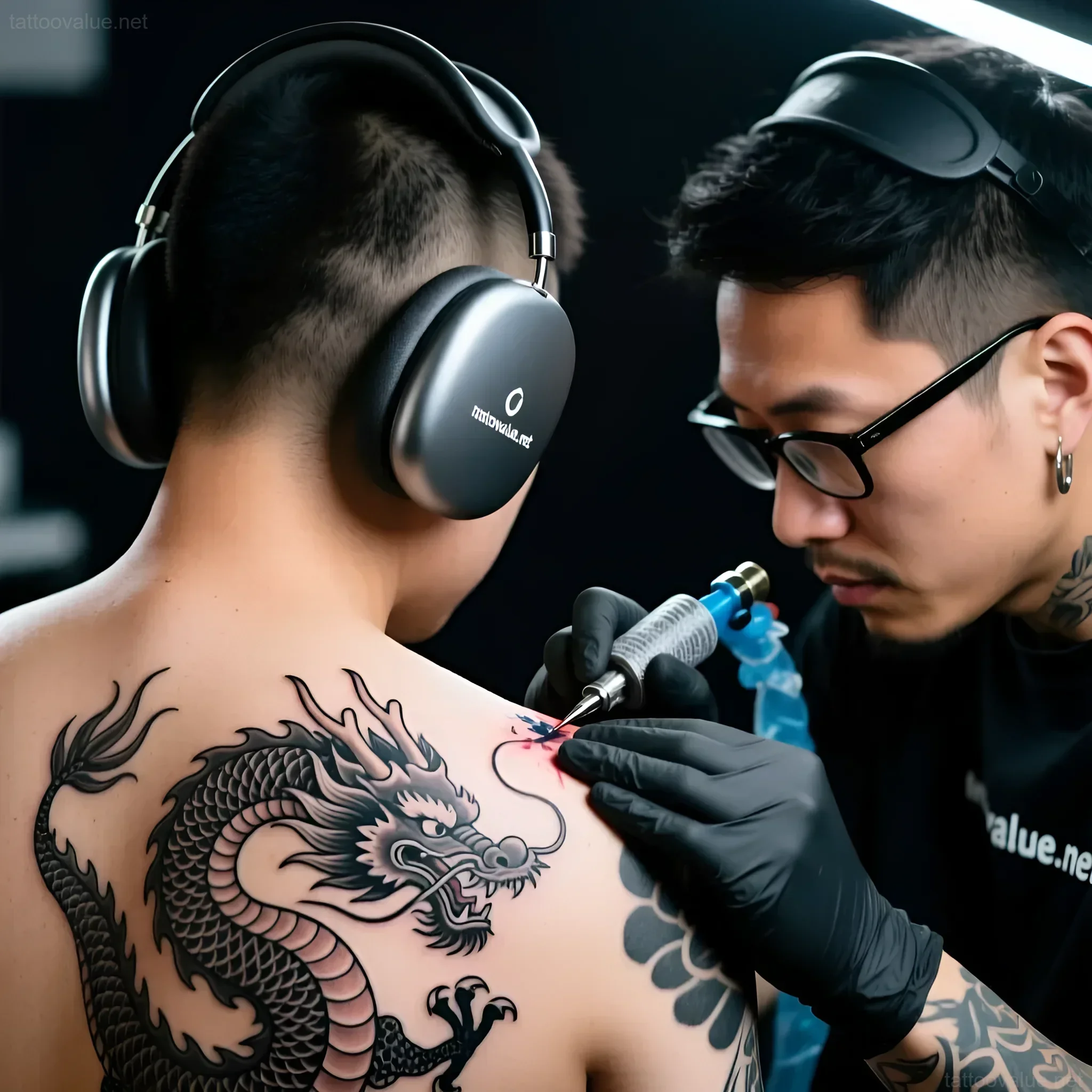
When selecting gear for the studio, understanding the difference between the two main types of noise reduction is critical, as they affect different frequencies:
Passive Noise Isolation (PNI)
PNI relies purely on physical barriers. Thick padding, dense materials, and a tight seal around the ear physically block sound waves from entering the ear canal. This is most effective against high-frequency sounds and sudden, sharp noises.
- Pros for Tattooing: Excellent for blocking high-frequency needle buzz and general studio chatter. Always ‘on’ (no battery required).
- Cons for Tattooing: Can feel bulky and hot. Does not effectively handle low-frequency rumbles (like street traffic or large air conditioning units).
Active Noise Cancellation (ANC)
ANC uses microphones to listen to ambient sound and generates an inverse sound wave (anti-noise) to cancel it out. This is highly effective at eliminating constant, low-frequency drones.
- Pros for Tattooing: Superb at neutralizing the constant, monotonous hum of tattoo machines and environmental low-frequency noise. Often allows for lighter, more comfortable designs than PNI alone.
- Cons for Tattooing: Requires battery power. Less effective against sudden, sharp, or erratic noises (though modern systems are improving).
The Ideal Combination for the Studio
For tattooing, the best headphones utilize Hybrid ANC. This technology combines the physical seal (PNI) to handle the highest frequencies and the active electronics (ANC) to eliminate the low-frequency machine drone. When evaluating headphones, look for models known for their superior performance in the mid-to-low frequency range, as this is where the most fatiguing machine noise resides.
4. Top 5 Noise-Cancelling Headphones for Tattoo Artists (and Clients!) – Detailed Reviews & Comparisons
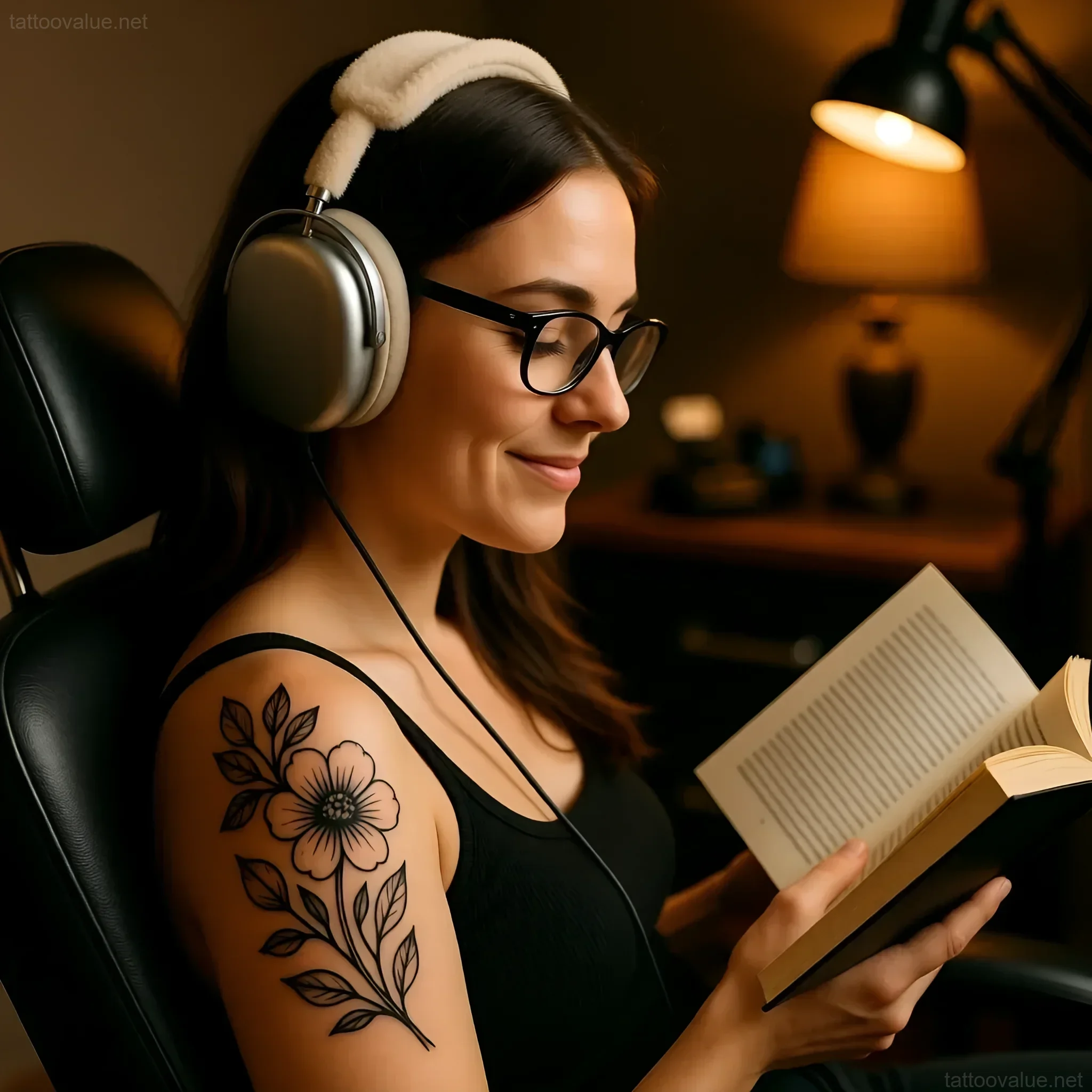
These selections prioritize comfort for long wear, superior ANC capabilities, and robust battery life, making them ideal dual-purpose investments for both the professional and their premium clientele.
1. Sony WH-1000XM5: The Industry Gold Standard
- Best Feature: Unbeatable ANC performance, especially in the low-mid frequency range.
- Artist Context: The XM5s feature a seamless automatic optimization based on environment, meaning the artist doesn’t have to fiddle with settings if the studio environment changes (e.g., a fan turns on). They are lighter than previous models, reducing neck strain over 10+ hours.
- Client Context: Exceptional sound quality makes for deep immersion. The ‘Speak-to-Chat’ function is invaluable—if the client needs to talk to the artist or take a quick sip of water, the music pauses and ambient sound is allowed in instantly, without removing the cans.
- Durability Note: The sleek finish is relatively easy to wipe down, but the plastic construction requires careful handling to prevent breakage.
2. Bose QuietComfort Ultra: Maximum Comfort and ANC Power
- Best Feature: Superior comfort and lightweight design; often cited as the best for long-haul wear.
- Artist Context: Bose has historically prioritized comfort and a gentle clamping force. For an artist constantly moving and leaning, the lack of pressure is a huge benefit. The ANC is highly effective, creating a near-silent environment ideal for deep focus.
- Client Context: If a client is lying prone for six hours, comfort is paramount. The lightweight build and plush earcups of the QC Ultra prevent the pain points that heavier headphones create.
- Practical Tip: Excellent transparency mode allows for natural conversations without the user feeling like they are shouting.
3. Apple AirPods Max: Premium Build and Studio Integration
- Best Feature: Unrivaled build quality (stainless steel, aluminum) and seamless integration for Apple ecosystem users.
- Artist Context: While heavy, the mesh canopy distributes weight exceptionally well. The stainless steel construction is highly durable and easier to sanitize than typical plastic. The physical Digital Crown offers tactile control, which is easier to manipulate with gloves or ink residue on the fingers than touch controls.
- Client Context: ANC is superb, particularly effective at neutralizing ambient chatter. The premium audio quality justifies the investment for clients who value high-fidelity sound during their session.
4. Sennheiser Momentum 4 Wireless: Marathon Battery Life
- Best Feature: Phenomenal battery life (up to 60 hours).
- Artist/Client Context: Battery fade is a genuine concern during marathon sessions. The Momentum 4 can easily handle a full week of artist use or multiple back-to-back 12-hour client sessions without needing a charge. This reliability is a major logistical benefit in a busy studio.
- ANC Performance: Very strong hybrid ANC, performing well against both high and low frequencies, packaged in a comfortable, understated design.
5. Anker Soundcore Space Q45: The Durable, High-Value Option
- Best Feature: Exceptional value and robust noise cancellation for the price point.
- Artist/Client Context: While not as premium as Bose or Sony, the Q45 delivers about 80% of the ANC performance at half the cost. This makes them an excellent choice for studios needing multiple pairs for clients, where the risk of accidental damage is higher.
- Practical Note: They offer a respectable 50 hours of playback with ANC enabled, minimizing charging downtime.
| Model | Best For | ANC Strength (1-5) | Battery Life (Hrs) | Comfort |
|---|---|---|---|---|
| Sony WH-1000XM5 | Overall Professional Use | 5 | 30 | Excellent |
| Bose QC Ultra | Max Client Comfort | 4.5 | 24 | Superior |
| Apple AirPods Max | Durability & Control | 4.5 | 20 | Very Good |
| Sennheiser Momentum 4 | Marathon Sessions | 4 | 60 | Very Good |
5. Best Noise-Cancelling Headphones for Clients: Comfort, Sound Quality & Session Length Considerations
While an artist might prioritize quick controls and durability, the client’s needs revolve almost entirely around sustained comfort and deep immersion. A client who is uncomfortable or distracted will shift, flinch, and struggle to remain still, compromising the tattoo.
Key Client Priorities:
1. Low Clamping Force:
- If a client is lying on their side or back, high clamping force can cause pain around the jawline and temples after just two hours. Models known for being ‘pillowy’ (like the Bose QC series) are highly recommended.
- Look for headphones with large, deep earcups that fully enclose the ear without pressing the pinna (outer ear) against the head.
2. Battery Life Over 10 Hours:
- While 20-30 hours is standard for most premium ANC headphones, ensure that the pair dedicated to clients is always fully charged. The psychological stress of the battery dying four hours into an eight-hour session is significant.
- Offering a long, high-quality cable for wired use (if the battery fails) or having a dedicated studio power bank nearby is essential preparation.
3. Intuitive Controls:
- Clients should be able to adjust volume or pause playback without asking the artist to stop working. Simple, large buttons or the tactile controls of the AirPods Max are better than finicky touchpads, especially when the client might be awkward or anxious.
4. Material Choice:
- Avoid headphones with velvet or suede-like coverings for clients, as these are impossible to sanitize effectively. Opt for protein leather or silicone earcups that can be thoroughly wiped down between uses.
Expert Tip: If you are setting up a client station, consider using wireless chargers for the headphones. This prevents cable damage and ensures the gear is always ready to go without messy wire management.
6. Beyond Headphones: Creating a Focused Tattoo Environment – Combining Tech with Studio Design
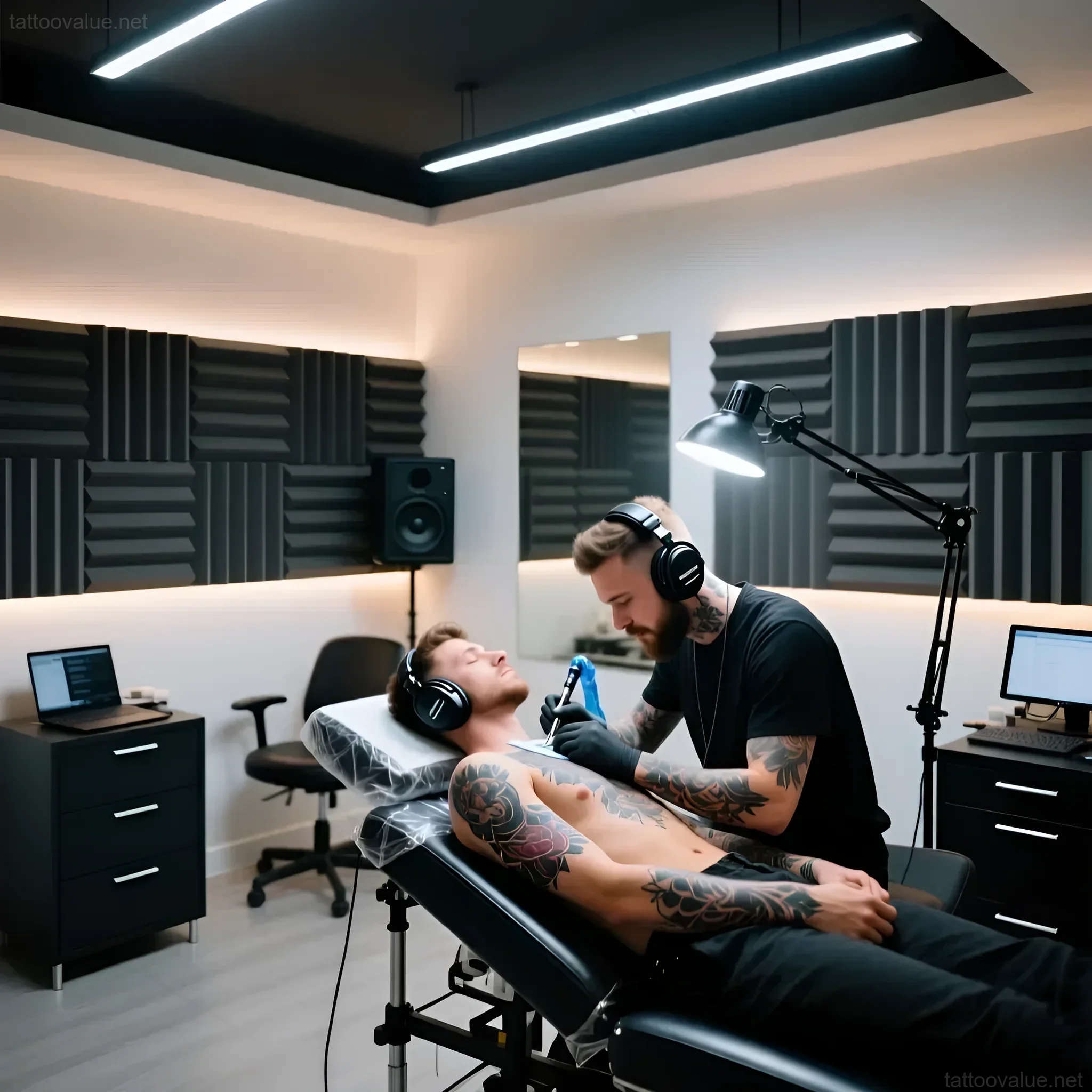
Headphones are only one part of the focus equation. A professional studio should integrate audio tech into its overall design philosophy to maximize concentration and comfort.
The Dedicated Client Entertainment Station
Don’t rely on the client’s phone for audio. Provide a studio-managed tablet or music player specifically loaded with high-quality, curated content:
- Curated Playlists: Offer specific playlists designed for concentration (e.g., ambient soundscapes, lo-fi beats, classical music).
- Podcast/Audiobook Library: Offer pre-downloaded, long-form content. Watching videos is distracting; listening allows the client to remain still while focused.
- Dedicated Charging: Install a small, easily accessible charging hub near the client’s station for their personal devices and the headphones.
Managing Studio Noise Pollution
While ANC handles the rest, the studio owner must manage the primary sources of noise:
- Machine Choice: Investing in high-quality rotary machines (which are generally quieter than coil machines) reduces the base level of noise that the ANC has to fight.
- Acoustic Paneling: Strategically placed acoustic panels or heavy curtains can dampen ambient noise and prevent sound from bouncing around the room, improving the overall effectiveness of the headphones.
- HVAC Silence: Ensure that ventilation or air conditioning units are not excessively loud. A constant, low rumble from a cheap HVAC unit is exactly the frequency range that can bypass even the best ANC over many hours.
The ‘Silent Studio’ Concept: Some high-end artists are adopting a ‘silent studio’ rule where unnecessary chatter is minimized, and all music is delivered through headphones. This creates an atmosphere of serious, focused work that clients appreciate.
7. Maintaining Your Headphones: Care, Cleaning & Longevity for Long-Term Use

In a tattoo studio, hygiene isn’t just a recommendation—it’s a legal and ethical requirement. Headphones, especially those used by multiple clients, are potential vectors for contamination if not cleaned properly.
The Three-Step Sanitation Protocol:
1. Surface Wiping (The Exterior):
- Use a mild, non-alcoholic cleaning wipe (like those approved for electronics or screen cleaning) to wipe down the headband and exterior plastic surfaces. Avoid harsh chemical disinfectants that can degrade plastic or paint.
- Pay special attention to the control buttons, which are high-touch areas.
2. Earcup Disinfection (The Critical Area):
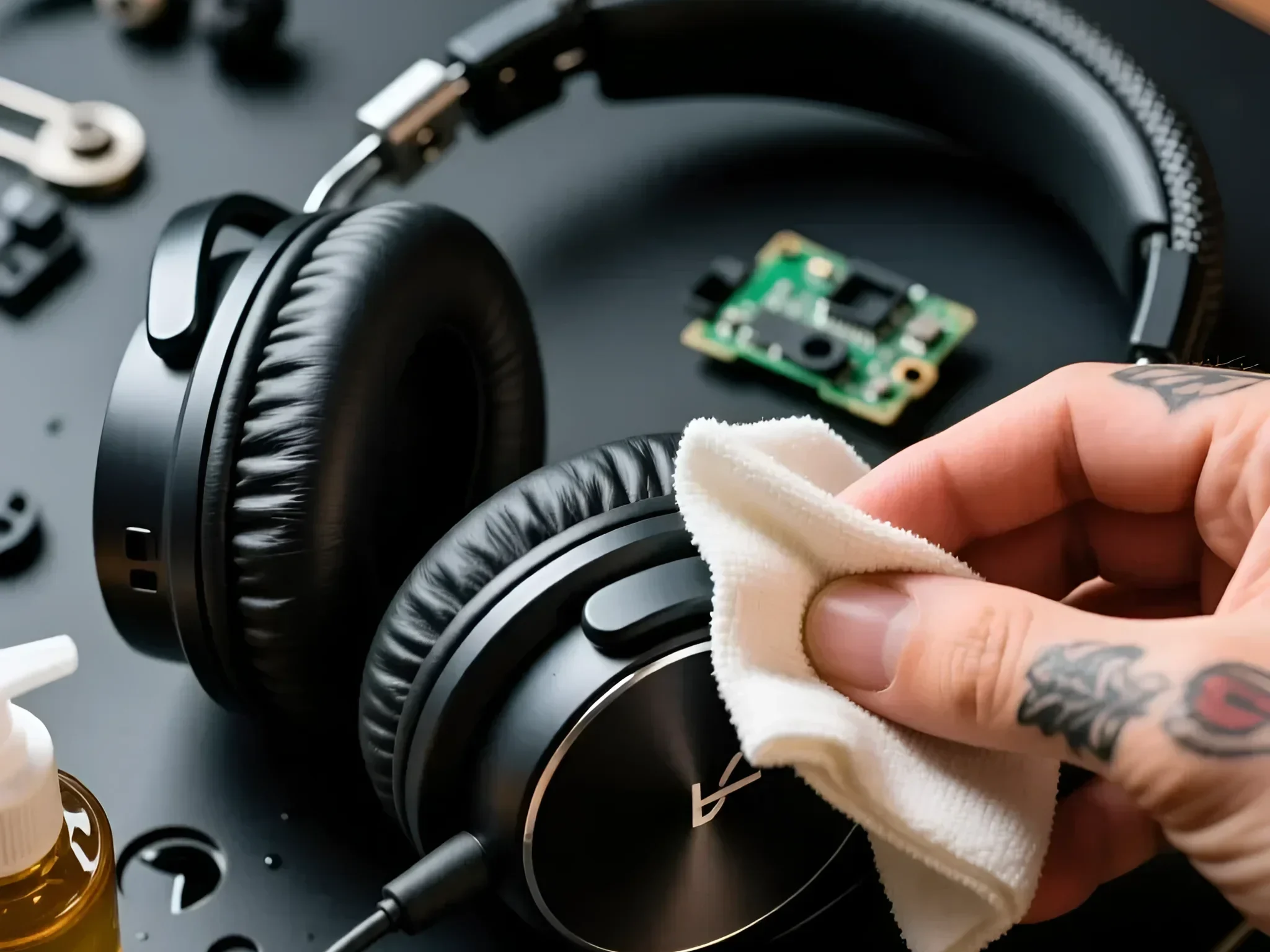
- The protein leather or silicone earcups absorb sweat and residue. Use a dedicated equipment disinfectant spray (like those used for gym equipment, ensuring they are non-corrosive) applied to a microfiber cloth, then wipe the cups thoroughly.
- Crucial Warning: Never spray liquid directly onto the earcups or speaker grille. Liquid ingress can destroy the delicate ANC microphones and drivers.
3. Protection and Replacement:
- Disposable Covers: For client use, invest in disposable, non-woven headphone covers. These thin covers act as a barrier against sweat, skin oils, and potential cross-contamination, greatly extending the life of the earcup material.
- Earcup Replacement: Earcup padding wears out, compresses, and holds odors over time. All major manufacturers (Sony, Bose, Apple) offer replacement pads. Replace client-use pads every 6-12 months, or immediately if any tears appear, as tears compromise both hygiene and the acoustic seal necessary for effective ANC.
Storage and Charging
Always store headphones in their designated case or on a charging stand when not in use. Leaving them exposed on a counter increases the risk of ink splatter, dust accumulation, and accidental drops.
8. FAQ: Common Questions About Noise-Cancelling Headphones for Tattoo Sessions
Q: Do ANC headphones truly block the sound of the machine?
A: High-quality ANC (like Sony XM5 or Bose QC Ultra) will neutralize the low-frequency drone (the ‘hum’) almost entirely. The high-frequency, sharp ‘tap’ of the needle on skin may still be minimally audible, particularly during delicate line work, but it is dramatically reduced to a level that is no longer distracting or anxiety-inducing.
Q: Is it safe for the artist to wear headphones while tattooing? Doesn’t it affect communication?
A: Yes, it is safe and often necessary for long sessions. The key is using the Transparency Mode (or Ambient Sound Mode) offered by most premium headphones. This mode uses the external microphones to pipe in ambient sound, allowing the artist to hear the client or colleagues clearly without removing the headphones, simply by tapping a button or covering an earcup.
Q: Are over-ear or in-ear headphones better for tattooing?
A: Over-ear (circumaural) headphones are superior for the studio environment. They offer better passive isolation, greater battery life, and are far more comfortable for 6+ hour sessions. In-ear buds (like AirPods Pro) are great for convenience but often cause ear fatigue and their battery life (4-6 hours) is insufficient for marathon sessions.
Q: Should I buy specialized ‘studio monitoring’ headphones instead of ANC headphones?
A: No, unless you are mixing music in the studio. Studio monitoring headphones (like Sennheiser HD 280 Pro) prioritize sound accuracy and passive isolation (PNI), but they typically lack ANC. ANC is essential for actively cancelling the low-frequency drone of the tattoo machine, which monitors cannot do. For focus and comfort, ANC is the better investment.
Q: What about wireless latency? Will the sound lag?
A: For listening to music, podcasts, or audiobooks, latency (the delay between the source and the headphones) is negligible with modern Bluetooth 5.0 or higher devices. It is not an issue for this application, unlike professional audio monitoring or gaming where milliseconds matter.